


Page 71 - GTM-3-3
P. 71
Global Translational Medicine                                  Evidence-based approach for TCM development


                                                                                      The Western
                                                                                         way
                                                                     Test    R
                                                                                     The Chinese way
                                                 All subjects
                                                are screened
                                                the Chinese  R
                                                   way
                                                                                      The Western
                                                                                         way
                                                                    Control  R
                                                                                     The Chinese way
                          All subjects  R
                                                                                      The Western
                                                                                         way
                                                                     Test    R
                                                 All subjects                        The Chinese way
                                                are screened
                                                 the Western  R
                                                   way
                                                                                      The Western
                                                                                         way
                                                                    Control  R
                                                                                     The Chinese way

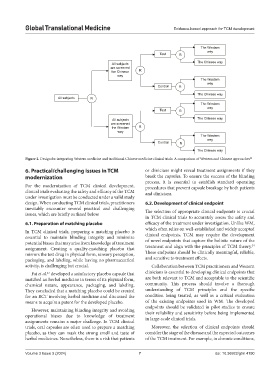
            Figure 2. Design for integrating Western medicine and traditional Chinese medicine clinical trials: A comparison of Western and Chinese approaches 22
            6. Practical/challenging issues in TCM             or clinicians might reveal treatment assignments if they
            modernization                                      break the capsules. To ensure the success of the blinding
                                                               process,  it  is  essential  to  establish  standard  operating
            For the modernization of TCM clinical development,   procedures that prevent capsule breakage by both patients
            clinical trials evaluating the safety and efficacy of the TCM   and clinicians.
            under investigation must be conducted under a valid study
            design. When conducting TCM clinical trials, practitioners   6.2. Development of clinical endpoint
            inevitably  encounter  several  practical  and  challenging
            issues, which are briefly outlined below.          The selection of appropriate clinical endpoints is crucial
                                                               in TCM clinical trials to accurately assess the safety and
            6.1. Preparation of matching placebo               efficacy of the treatment under investigation. Unlike WM,
                                                               which often relies on well-established and widely accepted
            In TCM clinical trials, preparing a matching placebo is   clinical endpoints, TCM may require  the development
            essential to maintain blinding integrity and minimize
            potential biases that may arise from knowledge of treatment   of novel endpoints that capture the holistic nature of the
                                                                                                            24
            assignment. Creating a quality-matching placebo that   treatment and align with the principles of TCM theory.
            mirrors the test drug in physical form, sensory perception,   These endpoints should be clinically meaningful, reliable,
            packaging, and labeling, while having no pharmaceutical   and sensitive to treatment effects.
            activity, is challenging but crucial.                Collaboration between TCM practitioners and Western
              Fai et al.  developed a satisfactory placebo capsule that   clinicians is essential to developing clinical endpoints that
                     23
            matched an herbal medicine in terms of its physical form,   are both relevant to TCM and acceptable to the scientific
            chemical nature, appearance, packaging, and labeling.   community. This process should involve a thorough
            They concluded that a matching placebo could be created   understanding of TCM principles and the specific
            for an RCT involving herbal medicine and discussed the   condition being treated, as well as a critical evaluation
            means to acquire a patent for the developed placebo.  of the existing endpoints used in WM. The developed
                                                               endpoints  should  be  validated in  pilot  studies  to  ensure
              However, maintaining blinding integrity and avoiding   their reliability and sensitivity before being implemented
            operational biases due  to  knowledge  of treatment   in large-scale clinical trials.
            assignments remains a major challenge. In TCM clinical
            trials, oral capsules are often used to prepare a matching   Moreover, the selection of clinical endpoints should
            placebo, as they can mask the strong smell and taste of   consider the stage of the disease and the expected outcomes
            herbal medicines. Nonetheless, there is a risk that patients   of the TCM treatment. For example, in chronic conditions,


            Volume 3 Issue 3 (2024)                         7                               doi: 10.36922/gtm.4190

