


Page 43 - IJAMD-1-1
P. 43
International Journal of AI
            for Material and Design                                                ML for quality improvement in L-PBF


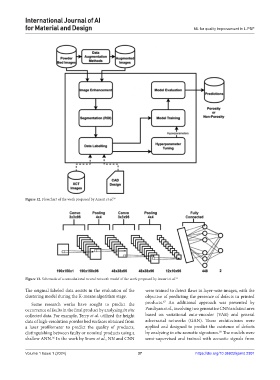
            Figure 12. Flowchart of the work proposed by Ansari et al. 59


            Figure 13. Schematic of a convolutional neural network model of the work proposed by Ansari et al. 59

            The original labeled data assists in the evaluation of the   were trained to detect flaws in layer-wise images, with the
            clustering model during the K-means algorithm stage.  objective of predicting the presence of defects in printed
                                                                      67
              Some research works have sought to predict the   products.  An additional approach was presented by
            occurrence of faults in the final product by analyzing in situ   Pandiyan et al., involving two generative CNN architectures
            collected data. For example, Terry et al. utilized the height   based on variational auto-encoder (VAE) and general
            data of high-resolution powder bed surfaces obtained from   adversarial networks (GAN). These architectures were
            a laser profilometer to predict the quality of products,   applied and designed to predict the existence of defects
            distinguishing between faulty or nominal products using a   by analyzing in situ acoustic signatures.  The models were
                                                                                              68
            shallow ANN.  In the work by Snow et al., NN and CNN   semi-supervised and trained with acoustic signals from
                       66
            Volume 1 Issue 1 (2024)                         37                      https://doi.org/10.36922/ijamd.2301

