


Page 42 - IJAMD-1-1
P. 42
International Journal of AI
            for Material and Design                                                ML for quality improvement in L-PBF


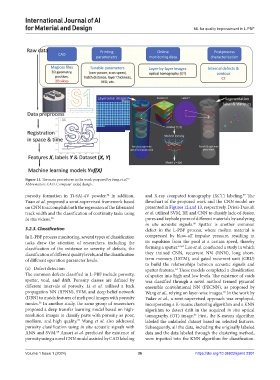
            Figure 11. The main procedures in the work proposed by Feng et al. 53
            Abbreviation: CAD: Computer-aided design.

            porosity formation in Ti-6Al-4V powder.  In addition,   and X-ray computed tomography (XCT) labeling.  The
                                                                                                        59
                                              54
            Yuan et al. proposed a semi-supervised framework based   flowchart of the proposed work and the CNN model are
            on CNN to accomplish both the regression of the fabricated   presented in Figures 12 and 13, respectively. Drissi-Daoudi
            track width and the classification of continuity tasks using   et al. utilized SVM, RF, and CNN to classify lack-of-fusion
            in situ videos. 55                                 pores and keyhole pores of different materials by analyzing
                                                               in situ acoustic signals.  Spatter is another common
                                                                                   60
            3.2.3. Classification                              defect in the L-PBF process, where molten material is
            In L-PBF process monitoring, several types of classification   compressed by blow-off impulse pressure, resulting in
            tasks draw the attention of researchers, including the   its  expulsion  from  the  pool  at  a  certain  speed,  thereby
            classification of the existence or severity of defects, the   forming a spatter. 61,62  Luo et al. conducted a study in which
            classification of different quality levels, and the classification   they trained CNN, recurrent NN (RNN), long short-
            of different operation parameter levels.           term memory (LSTM), and gated recurrent unit (GRU)
                                                               to build the relationships between acoustic signals and
            (a)  Defect detection                              spatter features.  These models completed a classification
                                                                            63
            The common defects classified in L-PBF include porosity,   of spatter into high and low levels. The existence of voids
            spatter, void, and drift. Porosity classes are defined by   was classified through a novel method termed pyramid
            different intervals of porosity. Li  et al. utilized a back   ensemble convolutional NN (PECNN), as proposed by
            propagation NN (BPNN), SVM, and deep belief network   Wang et al., relying on layer-wise images.  In the work by
                                                                                                64
            (DBN) to match features of melt pool images with porosity   Yadav  et al., a semi-supervised approach was employed,
            modes.  In another study, the same group of researchers   incorporating a K-means clustering algorithm and a KNN
                  56
            proposed a deep transfer learning model based on high-  algorithm  to  detect  drift  in  the acquired  in situ  optical
            resolution images to classify parts with porosity as poor,   tomography (OT) image.  First, the K-means algorithm
                                                                                   65
                                  57
            medium, and high quality.  Wang  et  al. also addressed   labeled the unlabeled dataset based on selected features.
            porosity classification using  in situ acoustic signals with   Subsequently, all the data, including the originally labeled
            ANN and SVM.  Ansari et al. predicted the existence of   data and the data labeled through the clustering method,
                         58
            porosity using a novel CNN model assisted by CAD labeling   were inputted into the KNN algorithm for classification.

            Volume 1 Issue 1 (2024)                         36                      https://doi.org/10.36922/ijamd.2301

