


Page 19 - IJAMD-1-2
P. 19
International Journal of AI for
            Materials and Design
                                                                                    Sustainable electronics using AI/ML


                     A                                  B


                     C


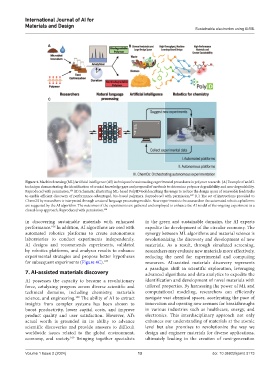
            Figure 4. Machine learning (ML)/artificial intelligence (AI) techniques for automating experimental procedures in polymer research. (A) Example of an ML
            technique demonstrating the identification of crucial knowledge gaps and proposal of methods to determine polymer degradability and non-degradability.
            Reproduced with permission.  (B) Schematic illustrating ML-based PolyID tool describing the usage to reduce the design space of renewable feedstocks
                               106
            to enable efficient discovery of performance-advantaged, bio-based polymers. Reproduced with permission.  (C) The set of instructions provided to
                                                                                  107
            ChemOS by researchers is interpreted through a natural language processing module. New experiments to be assessed on the automated robotics platforms
            are suggested by the AI algorithm. The outcomes of the experiments are gathered and employed to enhance the AI model of the ongoing experiment in a
            closed-loop approach. Reproduced with permission. 108
            in discovering sustainable materials with enhanced   in the green and sustainable domains, the AI experts
            performance.  In addition, AI algorithms are used with   expedite the development of the circular economy. The
                       106
            automated robotics platforms to create autonomous   synergy between ML algorithms and material science is
            laboratories to conduct experiments independently.   revolutionizing the discovery and development of new
            AI designs and recommends experiments, validated   materials. As a result, through simulated screening,
            by robotics platforms, and analyzes results to enhance   researchers may evaluate new materials more effectively,
            experimental strategies and propose better hypotheses   reducing the need  for experimental  and  computing
            for subsequent experiments (Figure 4C). 107        resources. AI-assisted materials discovery represents
                                                               a paradigm shift in scientific exploration, leveraging
            7. AI-assisted materials discovery                 advanced algorithms and data analytics to expedite the

            AI possesses the capacity to become a revolutionary   identification and development of novel materials with
            force, catalyzing progress across diverse scientific and   tailored properties. By harnessing the power of ML and
            technical domains, including chemistry, materials   computational modeling, researchers can efficiently
            science, and engineering.  The ability of AI to extract   navigate vast chemical spaces, accelerating the pace of
                                 108
            insights from complex systems has been shown to    innovation and opening new avenues for breakthroughs
            boost productivity, lower capital costs, and improve   in  various  industries  such  as  healthcare,  energy,  and
            product quality and user satisfaction. However, AI’s   electronics. This interdisciplinary approach not only
            actual worth is grounded in its ability to advance   enhances our understanding of materials at the atomic
            scientific discoveries and provide answers to difficult   level but also promises to revolutionize the way we
            worldwide issues related to the global environment,   design and engineer materials for diverse applications,
            economy, and society.  Bringing  together  specialists   ultimately leading to the creation of next-generation
                               109

            Volume 1 Issue 2 (2024)                         13                             doi: 10.36922/ijamd.3173

