


Page 21 - IJAMD-1-3
P. 21
International Journal of AI for
            Materials and Design
                                                                              Smart cockpit design with generative models


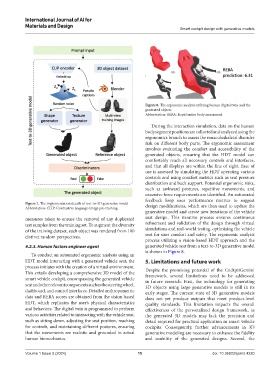
                                                               Figure 8. The ergonomic analysis utilizing human digital twin and the
                                                               generated objects
                                                               Abbreviation: REBA: Rapid entire body assessment.

                                                                 During the interaction simulation, data on the human
                                                               body segment positions are collected and analyzed using the
                                                               ergonomics branch to assess the musculoskeletal disorder
                                                               risk on different body parts. The ergonomic assessment
                                                               involves  evaluating  the  comfort  and  accessibility  of  the
                                                               generated objects, ensuring that the HDT model can
                                                               comfortably reach all necessary controls and interfaces,
                                                               and that all displays are within the line of sight. Ease of
                                                               use is assessed by simulating the HDT operating various
                                                               controls and using comfort metrics such as seat pressure
                                                               distribution and back support. Potential ergonomic risks,
                                                               such as awkward postures, repetitive movements, and
                                                               excessive force requirements are identified. An automated
                                                               feedback  loop uses performance metrics  to suggest
            Figure 7. The implementation details of text-to-3D generative model  design modifications, which are then used to update the
            Abbreviation: CLIP: Contrastive language-image pre-training.
                                                               generative model and create new iterations of the vehicle
            measures taken to ensure the removal of any duplicated   seat design. This iterative process ensures continuous
            test samples from the training set. To augment the diversity   refinement and validation of the design through virtual
            of the training dataset, each object was rendered from 100   simulations and real-world testing, optimizing the vehicle
            distinct random perspectives.                      seat for user comfort and safety. The ergonomic analysis
                                                               process utilizing a vision-based HDT approach and the
            4.2.3. Human factors engineer agent                generated vehicle seat from a text-to-3D generative model
                                                               is shown in Figure 8.
              To conduct an automated ergonomic analysis using an
            HDT model interacting with a generated vehicle seat, the   5. Limitations and future work
            process initiates with the creation of a virtual environment.
            This entails developing a comprehensive 3D model of the   Despite the promising potential of the CockpitGemini
                                                               framework, several limitations need to be addressed
            smart vehicle cockpit, encompassing the generated vehicle   in future research. First, the technology for generating
            seat and other relevant components such as the steering wheel,   3D  objects  using  large  generative  models  is  still  in  its
            dashboard, and control interfaces. Detailed anthropometric   early stages. The current state of 3D generative models
            data and REBA scores are obtained from the vision-based   does not yet produce outputs that meet product-level
            HDT, which replicates the  user’s physical  characteristics   quality standards. This limitation impacts the overall
            and behaviors. The digital twin is programmed to perform   effectiveness of the personalized design framework, as
            various activities related to interacting with the vehicle seat,   the generated 3D models may lack the precision and
            such as sitting down, adjusting the seat position, reaching   detail required for practical application in smart vehicle
            for controls, and maintaining different postures, ensuring   cockpits.  Consequently,  further  advancements  in  3D
            that  the movements  are realistic and grounded  in  actual   generative modeling are necessary to enhance the fidelity
            human biomechanics.                                and usability of the generated designs. Second, the


            Volume 1 Issue 3 (2024)                         15                             doi: 10.36922/ijamd.4220

