


Page 18 - IJAMD-1-3
P. 18
International Journal of AI for
Materials and Design
Smart cockpit design with generative models
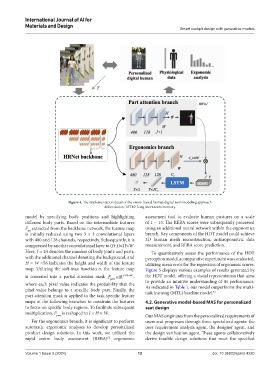
Figure 4. The implementation detail of the vision-based human digital twin modeling approach
Abbreviation: LSTM: Long short-term memory.
model by specifying body positions and highlighting assessment tool to evaluate human postures on a scale
different body parts. Based on the intermediate features of 1 – 15. The REBA scores were subsequently processed
F extracted from the backbone network, the feature map using an additional neural network within the ergonomics
int
is initially reduced using two 3 × 3 convolutional layers branch. Key components of the HDT model could achieve
with 480 and 128 channels, respectively. Subsequently, it is 3D human mesh reconstruction, anthropometric data
compressed by another convolutional layer to (J+1)×H×W. measurement, and REBA score prediction.
Here, J = 24 denotes the number of body joints and parts, To quantitatively assess the performance of the HDT
with the additional channel denoting the background, and perception model, a comparative experiment was conducted,
H = W =56 indicates the height and width of the feature utilizing mean error for the regression of ergonomic scores.
map. Utilizing the soft-max function σ, the feature map Figure 5 displays various examples of results generated by
is converted into a partial attention mask F ∈ J HW×× , the HDT model, offering a visual representation that aims
part to provide an intuitive understanding of its performance.
where each pixel value indicates the probability that the As indicated in Table 1, our model outperforms the multi-
pixel value belongs to a specific body part. Finally, the task learning (MTL) baseline model. 53
part attention mask is applied to the task-specific feature
maps of the following branches to constrain the features 4.2. Generative model-based MAS for personalized
to focus on specific body regions. To facilitate subsequent seat design
multiplication, F is reshaped to J × H × W. Our MAS originates from the personalized requirements of
part
For the ergonomics branch, it is significant to perform users and progresses through three specialized agents: the
automatic ergonomic analyses to develop personalized user requirement analysis agent, the designer agent, and
product design solutions. In this work, we utilized the the design verification agent. These agents collaboratively
rapid entire body assessment (REBA) ergonomic derive feasible design solutions that meet the specified
52
Volume 1 Issue 3 (2024) 12 doi: 10.36922/ijamd.4220

