


Page 14 - IJAMD-1-3
P. 14
International Journal of AI for
            Materials and Design
                                                                              Smart cockpit design with generative models


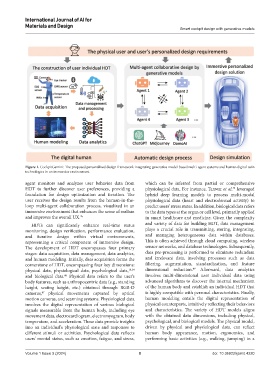
            Figure 1. CockpitGemini: The proposed personalized design framework integrating generative model-based multi-agent systems and human digital twin
            technologies in an immersive environment

            agent  monitors  and  analyzes  user  behavior  data  from   which can be inferred from partial or comprehensive
            HDT to further discover user preferences, providing a   physiological data. For instance, Tanwar et al.  leveraged
                                                                                                    48
            foundation  for  design  optimization  and iteration. The   hybrid deep learning models to process multi-modal
            user receives the design results from the human-in-the-  physiological data (heart and electrodermal activity) to
            loop multi-agent collaboration process, visualized in an   predict users’ stress states. In addition, biological data refers
            immersive environment that enhances the sense of realism   to the data types at the organ or cell level, primarily applied
            and improves the overall UX. 45                    in smart healthcare and medicine. Given the complexity
              HDTs can significantly enhance real-time status   and variety of data for building HDT, data management
            monitoring, design verification, performance evaluation,   plays a crucial role in transmitting, storing, integrating,
            and iterative design within virtual environments,   and managing heterogeneous data within databases.
            representing a critical component of immersive design.   This is often achieved through cloud computing, wireless
            The development of HDT encompasses four primary    sensor networks, and database technologies. Subsequently,
            stages: data acquisition, data management, data analytics,   data pre-processing is performed to eliminate redundant
            and human modeling. Initially, data acquisition forms the   and irrelevant data, involving processes such as data
            cornerstone of HDT, encompassing four key dimensions:   filtering, augmentation,  standardization,  and  feature
                                                                                   49
            physical data, physiological data, psychological data, 10,34    dimensional reduction.  Afterward, data analytics
            and biological data.  Physical data refers to the user’s   involves multi-dimensional user individual data using
                            46
            body features, such as anthropocentric data (e.g., standing   advanced algorithms to discover the internal mechanism
            height, seating  height, etc.)  obtained through RGB-D   of the human body and establish an individual HDT that
                   47
            cameras,  physical movements captured by optical   is highly compatible with personal characteristics. Finally,
            motion cameras, and scanning systems. Physiological data   human  modeling  entails  the digital representation  of
            involves the digital representation of various biological   physical counterparts, intuitively reflecting their behaviors
            signals measurable from the human body, including eye   and  characteristics.  The  variety  of  HDT  models  aligns
            movement data, electrocardiogram, electromyogram, body   with the obtained data dimensions, including physical,
            temperature, and acceleration. These data provide insights   psychological, and biological models. The physical model,
            into an individual’s physiological state and responses to   driven by physical and physiological data, can reflect
            different stimuli or activities. Psychological data reflects   human body appearance, motion, ergonomics, and
            users’ mental status, such as emotion, fatigue, and stress,   performing basic activities (e.g., walking, jumping) in a


            Volume 1 Issue 3 (2024)                         8                              doi: 10.36922/ijamd.4220

