


Page 30 - IJAMD-2-1
P. 30
International Journal of AI for
            Materials and Design
                                                                            ML molecular modeling of Ru: A KAN approach


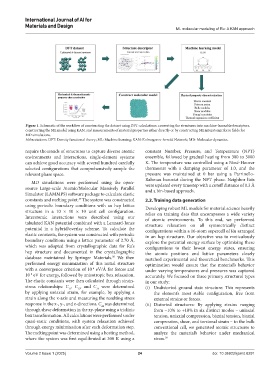
            Figure 1. Schematic of the workflow of constructing the dataset using DFT calculations, converting the structures into machine-learnable descriptors,
            constructing the ML model using KAN, and measurements of material properties either directly or by constructing ML interatomic force fields for
            MD simulations.
            Abbreviations: DFT: Density functional theory; ML: Machine learning; KAN: Kolmogorov-Arnold Network; MD: Molecular dynamics.

            require thousands of structures to capture diverse atomic   constant Number, Pressure, and Temperature (NPT)
            environments and interactions, single-element  systems   ensemble, followed by gradual heating from 300 to 3000
            can achieve good accuracy with several hundred carefully   K. The temperature was controlled using a Nosé-Hoover
            selected configurations that comprehensively sample the   thermostat with a damping parameter of 1.0, and the
            relevant phase space.                              pressure was maintained at 0 bar using a Parrinello-
                                                               Rahman  barostat  during  the  NPT  phase.  Neighbor  lists
              MD simulations were performed using the open-
            source Large-scale Atomic/Molecular Massively Parallel   were updated every timestep with a cutoff distance of 0.3 Å
                                                               and a bin-based approach.
            Simulator (LAMMPS) software package to calculate elastic
            constants and melting point.  The system was constructed   2.2. Training data generation
                                  37
            using  periodic  boundary  conditions  with  an  hcp  lattice   Developing robust ML models for material science heavily
            structure  in a  10  ×  10 ×  10  unit  cell  configuration.   relies on training data that encompasses a wide variety
            Interatomic interactions were described using our   of atomic environments. To this end, we performed
            tabulated KAN potential combined with a Lennard-Jones   structure relaxation on all symmetrically distinct
            potential  in  a  hybrid/overlay  scheme.  To  calculate  the   configurations within a 16-atom supercell of Ru arranged
            elastic constants, the system was constructed with periodic   in an hcp structure. Our objective was to meticulously
            boundary conditions using a lattice parameter of 2.70 Å,   explore the potential energy surface by optimizing these
            which was adopted from crystallographic data for Ru’s   configurations to their lowest  energy  states, ensuring
            hcp structure and documented in the crystallographic   the atomic positions and lattice parameters closely
            database maintained by Springer Materials.  We then   matched experimental and theoretical benchmarks. This
                                                 38
            performed energy minimization of this initial structure   optimization would ensure that the material’s behavior
            with a convergence criterion of 10  eV/Å for forces and   under varying temperatures and pressures was captured
                                        -6
            10  eV for energy, followed by anisotropic box relaxation.   accurately. We focused on three primary structural types
              -8
            The elastic constants were then calculated through strain-  in our study:
            stress  relationships:  C ,  C ,  and  C   were  determined   (i)  Undistorted ground state structure: This represents
                              11
                                  12
                                          13
            by applying uniaxial strain, for example, by applying a   the element’s most stable configuration, free from
            strain along the x-axis and measuring the resulting stress   external strains or forces.
            response in the x-, y-, and z-directions. C  was determined   (ii)  Distorted structures: By applying strains ranging
                                            44
            through shear deformation in the xy-plane using a triclinic   from −10% to +10% in six distinct modes – uniaxial
            box transformation. All calculations were performed under   tension, uniaxial compression, biaxial tension, biaxial
            quasi-static conditions, with system relaxation achieved   compression, shear, and torsional strain – to the bulk
            through energy minimization after each deformation step.   conventional cell, we generated atomic structures to
            The melting point was determined using a heating method,   analyze the material’s behavior under mechanical
            where the system was first equilibrated at 300 K using a   stress. 39


            Volume 2 Issue 1 (2025)                         24                             doi: 10.36922/ijamd.8291

