


Page 65 - IJAMD-2-2
P. 65
International Journal of AI for
            Materials and Design
                                                                               A unified industrial AI foundation framework


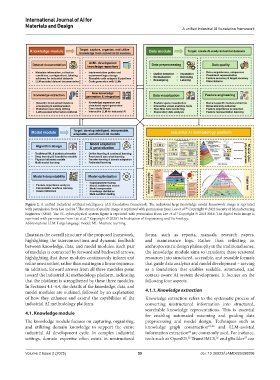
            Figure 2. A unified industrial artificial intelligence (AI) foundation framework. The industrial large knowledge model framework image is reprinted
            with permission from Lee and Su.  The stream of quality image is reprinted with permission from Lee et al.  Copyright © 2022 Society of Manufacturing
                                                                                20
                                 7
            Engineers (SME). The 5C-cyber-physical system figure is reprinted with permission from Lee et al.  Copyright © 2018 SME. The digital twin image is
                                                                            4
            reprinted with permission from Lee et al.  Copyright © 2020 The Institution of Engineering and Technology.
                                      19
            Abbreviations: LLM: Large language model; ML: Machine learning.
            illustrates the overall structure of the proposed framework,   forms, such as reports, manuals, research papers,
            highlighting the interconnections and dynamic feedback   and maintenance logs. Rather than reflecting an
            between knowledge, data, and model modules. Each pair   anthropocentric design philosophy in the traditional sense,
            of modules is connected by forward and backward arrows,   the knowledge module aims to transform these scattered
            highlighting that these modules continuously inform and   resources into structured, accessible, and reusable formats
            refine one another, rather than existing in a linear sequence.   that guide data analytics and model development – serving
            In addition, forward arrows from all three modules point   as a foundation that enables scalable, automated, and
            toward the industrial AI methodology platform, indicating   context-aware AI system development. It focuses on the
            that the platform is strengthened by these three modules.   following four aspects.
            In Sections 4.1-4.4, the details of the knowledge, data, and
            model modules are outlined, followed by an explanation   4.1.1. Knowledge extraction
            of how they enhance and extend the capabilities of the   Knowledge extraction refers to the systematic process of
            industrial AI methodology platform.                converting unstructured information into structured,
                                                               searchable knowledge representations. This is essential
            4.1. Knowledge module                              for enabling automated reasoning and guiding data
            The knowledge module focuses on capturing, organizing,   preprocessing and model design. Techniques such as
            and  utilizing  domain  knowledge  to  support  the  entire   knowledge  graph construction 21-23  and LLM-assisted
                                                                                 24
            industrial AI development cycle. In complex industrial   information extraction  are commonly used. For instance,
            settings, domain expertise often exists in unstructured   tools such as OpenKE,  TransOMCS,  and gBuilder  can
                                                                                             26
                                                                                                         27
                                                                                 25
            Volume 2 Issue 2 (2025)                         59                        doi: 10.36922/IJAMD025080006

