


Page 77 - IJAMD-2-2
P. 77
International Journal of AI for
            Materials and Design                                                   Prediction of AM defect based on DL


                                                               the column of the scanning speed, there were 14 “1800”
                                                               values; nine “1700” values and “1900” values, respectively;
                                                               and  five “600”  values,  “1000”  values,  “1400”  values,  and
                                                               “2200” values, respectively. From an AM perspective, the
                                                               scanning rotation degree has little effect on the LOF defect
                                                               formation, as it does not significantly influence energy
                                                               input. Therefore, the parameter of scanning rotation was
                                                               not considered in the DL analysis in this research. Because
                                                               there was unbalanced data in columns (with only 52 rows),
                                                               the dataset used in this paper was small and unbalanced. In
                                                               the column of LOF, “yes” was set to 1, and “no” was set to
                                                               0 for DL. There were thirty “1” values and twenty-two “0”
                                                               values. The experimental data were not originally prepared
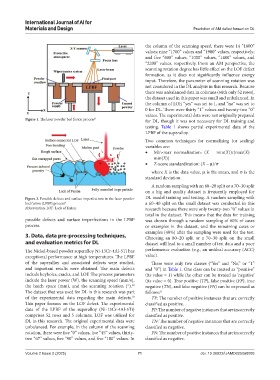
            Figure 1. The laser powder bed fusion process 8    for DL, though it was not necessary for DL training and
                                                               testing.  Table  1 shows partial experimental data of the
                                                               LPBF of the superalloy.
                                                               Two common techniques for normalizing (or scaling)
                                                               variables are:
                                                               •   Min-max normalization: (X – min(X))/(max(X) –
                                                                  min(X))
                                                               •   Z-score standardization: (X – μ)/σ
                                                                 where X is the data value, μ is the mean, and σ is the
                                                               standard deviation.
                                                                 A random sampling with an 80–20 split or a 70–30 split
                                                               on a big and quality dataset is frequently employed for
            Figure 2. Possible defects and surface imperfections in the laser powder   DL model training and testing. A random sampling with
            bed fusion (LPBF) process 9                        a 60–40 split on the small dataset was conducted in this
            Abbreviation: LOF: Lack of fusion.                 research because there were only twenty-two “0” values in
                                                               total in the dataset. This means that the data for training
            possible defects and surface imperfections in the LPBF   was chosen through a random sampling of 60% of cases
            process.                                           or  examples  in  the  dataset,  and  the  remaining  cases  or
                                                               examples (40%) after the sampling were used for the test.
            3. Data, data pre-processing techniques,           Choosing an 80–20 split or a 70–30 split on the small
            and evaluation metrics for DL                      dataset will lead to a small number of test data and a poor

            The Nickel-based powder superalloy Ni-13Cr-4Al-5Ti has   performance evaluation (e.g., an unideal accuracy (ACC)
            exceptional performance at high temperatures. The LPBF   value).
            of  the  superalloy  and  associated  defects  were  studied,   There were only two classes (“Yes” and “No,” or “1”
            and important results were obtained. The main defects   and “0”) in Table 1. One class can be treated as “positive”
            include keyholes, cracks, and LOF. The process parameters   (its value = 1) while the other can be treated as ‘negative’
            include the laser power (W), the scanning speed (mm/s),   (its value = 0). True positive (TP), false positive (FP), true
            the hatch space (mm), and the scanning rotation (°). 10   negative (TN), and false negative (FN) can be expressed as
            The dataset that was used for DL in this research was part   follows: 11
            of  the  experimental  data  regarding  the  main  defects. 10   TP: The number of positive instances that are correctly
            This paper focuses on the LOF defect. The experimental   classified as positive.
            data of the LPBF of the superalloy (Ni-13Cr-4Al-5Ti)   FP: The number of negative instances that are incorrectly
            comprises 52 rows and 5 columns. LOF was utilized for   classified as positive.
            DL in this research. The original experimental data were   TN: The number of negative instances that are correctly
            unbalanced. For example, in the column of the scanning   classified as negative.
            rotation, there were five “0” values, five “45” values, thirty-  FN: The number of positive instances that are incorrectly
            two “67” values, five “90” values, and five “180” values. In   classified as negative.


            Volume 2 Issue 2 (2025)                         71                        doi: 10.36922/IJAMD025060005

