


Page 91 - IJAMD-2-2
P. 91
International Journal of AI for
            Materials and Design                                                        Fruit image detection using AI


            of error, which may lead to more misclassifications. In
            contrast, a higher C value reduces this margin, thereby
            reducing misclassification rates.
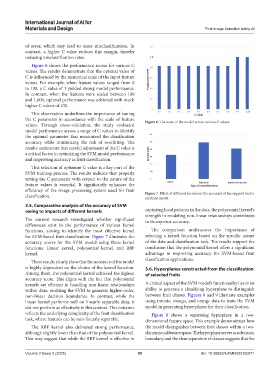
              Figure 6 shows the performance scores for various C
            values. The results demonstrate that the optimal value of
            C is influenced by the numerical scale of the input feature
            values. For example, when feature values ranged from 0
            to 100, a C value of 1 yielded strong model performance.
            In contrast, when the features were scaled between 100
            and 1,000, optimal performance was achieved with much
            higher C values of 100.
              This observation underlines the importance of tuning
            the C parameter in accordance with the scale of feature   Figure 6. The score of the model across various C values
            values. Through cross-validation, the study evaluated
            model performance across a range of C values to identify
            the optimal parameter that maximized the classification
            accuracy while minimizing the risk of overfitting. The
            results underscore that careful adjustment of the C value is
            a critical factor in optimizing the SVM model performance
            and improving accuracy in fruit classification.
              This selection of optimum C value is a key part of the
            SVM training process. The results indicate that properly
            setting the C parameter with respect to the nature of the
            feature  values  is  essential.  It  significantly  enhances  the
            efficiency of the image processing system used for fruit
            classification.                                    Figure 7. Effect of different kernels on the accuracy of the support vector
                                                               machine model
            3.5. Comparative analysis of the accuracy of SVM
            owing to impacts of different kernels              capturing local patterns in the data, the polynomial kernel’s
                                                               strength in modeling non-linear relationships contributes
            The current research investigated whether significant   to its superior accuracy.
            differences  exist in the performance of various kernel
            functions, aiming to identify the most effective kernel   The comparison underscores the importance of
            for SVM-based fruit classification. Figure 7 illustrates the   selecting  a kernel function based  on the  specific  nature
            accuracy scores for the SVM model using three kernel   of the data and classification task. The results support the
            functions: Linear kernel, polynomial kernel, and RBF   conclusion that the polynomial kernel offers a significant
            kernel.                                            advantage in improving accuracy for SVM-based fruit
                                                               classification applications.
              These results clearly show that the accuracy of the model
            is highly dependent on the choice of the kernel function.   3.6. Hyperplanes constructed from the classification
            Among them, the polynomial kernel achieved the highest   of selected fruits
            accuracy score. This aligns with the fact that polynomial
            kernels are efficient in handling non-linear relationships   A critical aspect of the SVM model’s functionality lies in its
            within data, enabling the SVM to generate higher-order,   ability to generate a classifying hyperplane to distinguish
            non-linear decision boundaries. In contrast, while the   between fruit classes. Figures 8 and 9 illustrate examples
            linear kernel performs well on linearly separable data, it   using tomato, mango, and orange data to train the SVM
            did not perform as effectively in this context. This outcome   model in generating hyperplanes for their classification.
            reflects the underlying complexity of the fruit classification   Figure  8  shows a separating hyperplane in a two-
            task, where features can be non-linearly separable.  dimensional feature space. This example demonstrates how
              The RBF kernel also delivered strong performance,   the model distinguishes between fruit classes within a two-
            although slightly lower than that of the polynomial kernel.   dimensional feature space. The hyperplane serves as a decision
            This may suggest that while the RBF kernel is effective in   boundary, and the clear separation of classes suggests that the


            Volume 2 Issue 2 (2025)                         85                        doi: 10.36922/IJAMD025150011

