


Page 10 - IJB-2-2
P. 10
Advancing cancer research using bioprinting for tumor-on-a-chip platforms

            money (US $2.6 billion) [34,35] , there is a need for al-  tissue architectures with  ease [39–42] . The technology
            ternative options in preclinical drug testing [36] . A low-   offers  high throughput and  excellent reproducibility,
            cost, reproducible model that mimics tumors, includ-  generating cancer tissue models which closely mimic
            ing  the microenvironment, cell distribution and vas-  the structure and function of tumors in vivo, including
            culature, would allow high-throughput drug screening   tumor heterogeneity and  vascular structures. With
            prior to clinical trials as an efficient alternative to an-  rapid advances in bioprinting technology for cancer
            imal  models. Such a bioprinted model has already   models, there is potential to expand our basic under-
                                         [5]
            been reported for cervical cancer . Additionally, bio-  standing of cancer and develop effective therapies.
            printed models can be used to test other materials re-
            levant to drug delivery, such as scaffolds for releasing   Conflict of Interest and Funding
            signals [37]  and polymer  microspheres for biodegrada-
            tion studies [38] .                                No conflict of interest was reported by the authors. ST
               Although there is room for further innovation in   acknowledges the University of Connecticut Research
            bioprinting,  this approach  shows great promise for   Excellence Program award for financial support of
            efficient generation  of biomimetic tumor  models to   this research.
            further advance and accelerate cancer research. A   Acknowledgements
            unique advantage of bioprinting compared  to other
            microfabrication techniques is the ability to precisely   The authors would like to acknowledge Chu Hsiang
            control the spatial arrangement of cells and complex     Yu for preparing the figure in this article.

             (A)                                                      (C)


              (B)

                                                       (D)


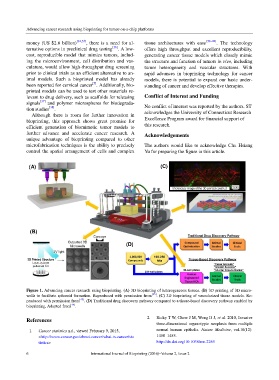
            Figure 1. Advancing cancer research using bioprinting. (A) 3D bioprinting of heterogeneous tissues. (B) 3D printing of 3D micro-
            wells to facilitate spheroid formation. Reproduced with permission from [25] . (C) 3D bioprinting of vascularized tissue models. Re-
            produced with permission from [43] . (D) Traditional drug discovery pathway compared to a tissue-based discovery pathway enabled by
            bioprinting. Adapted from [44] .

            References                                          2.   Ridky T W, Chow J M, Wong D J, et al. 2010, Invasive
                                                                    three-dimensional organotypic neoplasia from  multiple
              1.   Cancer statistics n.d., viewed February 9, 2015,   normal human epithelia.  Nature Medicine, vol.16(12):
                 <http://www.cancer.gov/about-cancer/what-is-cancer/sta  1450–1455.
                 tistics>                                           http://dx.doi.org/10.1038/nm.2265

            6                           International Journal of Bioprinting (2016)–Volume 2, Issue 2

