


Page 268 - IJB-10-2
P. 268
International Journal of Bioprinting                                3D bioprinting of boluses for radiotherapy


            Table 2. Comparison of planning target volume’s parameters among different permutations of IMRT and VMAT plans

                                       D min        D mean       D max                     V 95       D 95
                                      (cGy)         (cGy)       (cGy)     CI      HI       (%)       (cGy)
             Printed-IMRT             6128.6        6234.5      6537.6    0.30    1.04     99.49     6101.8
             Printed-VMAT             6143.7        6237.5      6616.5    0.29    1.04     99.56     6120.8
             Commercial-IMRT          6022.1        6136.1      6757.1    0.27    1.24     90.66     5194.9
             Commercial-VMAT          6066.6        6154.7      6584.5    0.26    1.17     91.40     5458.7
             Virtual-IMRT             6121.3        6234.8      6564.8    0.28    1.05     98.29     6080.0
             Virtual-VMAT             6120.4        6219.4      6554.1    0.30    1.05     98.37     6081.4
             Nobolus-IMRT             5701.1        6106.0      7113.8    0.31    1.21     80.01     5328.1
             Nobolus-VMAT             5805.7        6175.9      6904.2    0.33    1.18     84.37     5519.8
            Abbreviations: CI, conformity index; D , dose covering 95% of volume; HI, homogeneity index; V , volume covering 95% of dose.
                                                                          95
                                     95


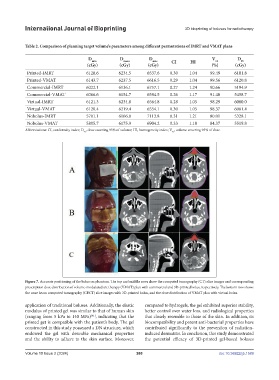
            Figure 7. Accurate positioning of the bolus on phantom. The top and middle rows show the computed tomography (CT) slice images and corresponding
            prescription dose distribution of volume-modulated arc therapy (VMAT) plan with commercial and 3D-printed bolus, respectively. The bottom row shows
            the cone beam computed tomography (CBCT) slice images with 3D-printed bolus, and the dose distribution of VMAT plan with virtual bolus.

            application of traditional boluses. Additionally, the elastic   compared to hydrogels, the gel exhibited superior stability,
            modulus of printed gel was similar to that of human skin   better control over water loss, and radiological properties
            (ranging from 5 kPa to 140 MPa) , indicating that the   that closely resemble to those of the skin. In addition, its
                                        [41]
            printed get is compatible with the patient’s body. The gel   biocompatibility and potent anti-bacterial properties have
            constructed in this study possessed a DN structure, which   contributed significantly to the prevention of radiation-
            endowed the gel with desirable mechanical properties   induced dermatitis. In conclusion, this study demonstrated
            and  the  ability  to  adhere  to  the  skin  surface.  Moreover,   the potential efficacy of 3D-printed gel-based boluses


            Volume 10 Issue 2 (2024)                       260                                doi: 10.36922/ijb.1589

