


Page 445 - IJB-10-2
P. 445
International Journal of Bioprinting                                 3D-printed silicon nitride-PEEK implants


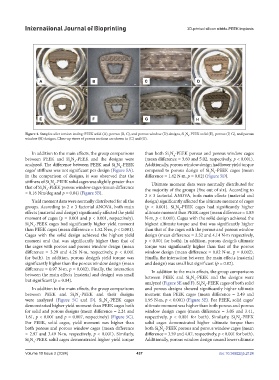
            Figure 4. Samples after torsion testing: PEEK solid (A), porous (B, C), and porous window (D) designs, Si N -PEEK solid (E), porous (F, G), and porous
                                                                                 4
                                                                                3
            window (H) designs. Close-up views of porous sections are shown in (C) and (G).
               In addition to the main effects, the group comparisons   than both Si N -PEEK porous and porous window cages
                                                                           4
                                                                         3
            between  PEEK  and  Si N -PEEK  and  the  designs  were   (mean difference = 3.60 and 5.02, respectively, p < 0.001).
                               3
                                 4
            analyzed. The difference between PEEK and Si N -PEEK   Additionally, porous window design had lower yield torque
                                                  3
                                                    4
            cages’ stiffness was not significant per design (Figure 5A).   compared to porous design of Si N -PEEK cages (mean
                                                                                          3
                                                                                            4
            In the comparison of designs, it was observed that the   difference = 1.42 N·m, p = 0.02) (Figure 5D).
            stiffness of Si N -PEEK solid cages was slightly greater than   Ultimate moment data were normally distributed for
                        4
                      3
            that of Si N -PEEK porous window cages (mean difference   the majority of the groups (five out of six). According to
                     4
                   3
            = 0.16 Nm/deg and p = 0.04) (Figure 5B).
                                                               2 × 3 factorial ANOVA, both main effects (material and
               Yield moment data were normally distributed for all the   design) significantly affected the ultimate moment of cages
            groups. According to 2 × 3 factorial ANOVA, both main   (p < 0.001). Si N -PEEK cages had significantly higher
                                                                             4
                                                                           3
            effects (material and design) significantly affected the yield   ultimate moment than PEEK cages (mean difference = 1.83
            moment of cages (p = 0.001 and p < 0.001, respectively).   N·m, p < 0.001). Cages with the solid design achieved the
            Si N -PEEK cages had significantly higher yield moment   highest ultimate torque and that was significantly higher
               4
             3
            than PEEK cages (mean difference = 1.52 N·m, p < 0.001).   than that of the cages with the porous and porous window
            Cages with the solid design achieved the highest yield   design (mean difference = 3.32 and 4.14 N·m respectively,
            moment and that was significantly higher than that of   p < 0.001 for both). In addition, porous design’s ultimate
            the cages with porous and porous window design (mean   torque was significantly higher than that of the porous
            difference = 3.29 and 4.26 N·m, respectively,  p < 0.001   window design (mean difference = 0.82 N·m, p = 0.002).
            for both).  In addition, porous design’s yield torque was   Finally, the interaction between the main effects (material
            significantly higher than the porous window design (mean   and design) was small but significant (p = 0.02).
            difference = 0.97 N·m, p = 0.002). Finally, the interaction   In addition to the main effects, the group comparisons
            between the main effects (material and design) was small   between  PEEK  and  Si N -PEEK  and  the  designs  were
            but significant (p = 0.04).                                           3  4
                                                               analyzed (Figure 5E and F). Si N -PEEK cages of both solid
                                                                                      3
                                                                                        4
               In addition to the main effects, the group comparisons   and porous designs showed significantly higher ultimate
            between PEEK and Si N -PEEK and their designs      moment than PEEK cages (mean difference = 2.49 and
                                   4
                                 3
            were analyzed (Figure 5C and  D). Si N -PEEK cages   1.95 N·m, p < 0.001) (Figure 5E). For PEEK, solid cages’
                                               4
                                             3
            demonstrated higher yield moment than PEEK cages both   ultimate moment was higher than both porous and porous
            for solid and porous designs (mean difference = 2.24 and   window design cages (mean difference = 3.05 and 3.41,
            1.61, p < 0.001 and p = 0.007, respectively) (Figure 5C).   respectively,  p < 0.001 for both). Similarly, Si N -PEEK
                                                                                                       4
                                                                                                     3
            For PEEK, solid cages, yield moment was higher than   solid  cages  demonstrated higher  ultimate  torque  than
            both porous and porous window cages (mean difference   both Si N -PEEK porous and porous window cages (mean
                                                                       4
                                                                    3
            = 2.97 and 3.49 N·m, respectively,  p < 0.001). Similarly,   difference = 3.59 and 4.87, respectively, p < 0.001 for both).
            Si N -PEEK solid cages demonstrated higher yield torque   Additionally, porous window design caused lower ultimate
               4
             3
            Volume 10 Issue 2 (2024)                       437                                doi: 10.36922/ijb.2124

