


Page 448 - IJB-10-2
P. 448
International Journal of Bioprinting                                 3D-printed silicon nitride-PEEK implants


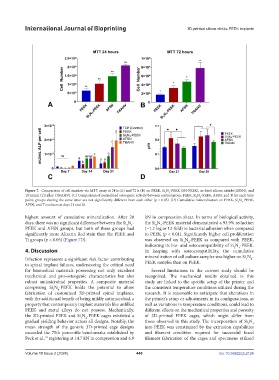
            Figure 7.  Comparison of cell number via MTT assay at 24 h (A) and 72 h (B) on PEEK, Si N -PEEK (SN-PEEK), as-fired silicon nitride (AFSN), and

                                                                         4
                                                                       3
            Titanium (Ti) alloy (Ti6Al4V). (C) Comparison of normalized osteogenic activity between control group, PEEK, Si N -PEEK, AFSN, and Ti for each time
                                                                                     3
                                                                                      4
            point; groups sharing the same letter are not significantly different from each other (p < 0.05). (D) Cumulative mineralization on PEEK, Si N -PEEK,
                                                                                                        4
                                                                                                      3
            AFSN, and Ti surfaces at days 21 and 28.
            highest amount  of cumulative  mineralization.  After  28   kN in compression shear. In terms of biological activity,
            days, there was no significant difference between the Si N -  the Si N -PEEK material demonstrated a 93.9% reduction
                                                                     4
                                                       3
                                                         4
                                                                   3
            PEEK and AFSN groups, but both of these groups had   (~1.2 log or 12-fold) in bacterial adhesion when compared
            significantly more Alizarin Red stain than the PEEK and   to PEEK (p < 0.01). Significantly higher cell proliferation
            Ti groups (p < 0.05) (Figure 7D).                  was observed on Si N -PEEK as compared with PEEK,
                                                                                 4
                                                                               3
                                                               indicating its bio- and osteocompatibility of Si N -PEEK.
                                                                                                     3
                                                                                                       4
            4. Discussion                                      In keeping with osteocompatibility, the cumulative
            Infection represents a significant risk factor contributing   mineralization of cell culture samples was higher on Si N -
                                                                                                          3
                                                                                                            4
            to spinal implant failures, underscoring the critical need   PEEK samples than on PEEK.
            for biomedical materials possessing not only excellent   Several limitations to the current study should be
            mechanical  and  pro-osteogenic  characteristics  but  also   recognized. The mechanical results obtained in this
            robust  antimicrobial  properties.  A  composite  material   study are linked to the specific setup of the printer and
            comprising Si N -PEEK holds the potential to allow   the consistent temperature conditions utilized during the
                          4
                        3
            fabrication of customized 3D-printed spinal implants,   research. It is reasonable to anticipate that alterations in
            with the additional benefit of being mildly antimicrobial, a   the printer’s setup or adjustments in its configurations, as
            property that contemporary implant materials like unfilled   well as variations in temperature conditions, could lead to
            PEEK and metal alloys do not possess. Mechanically,   different effects on the mechanical properties and porosity
            the 3D-printed PEEK and Si N -PEEK cages exhibited a   of 3D-printed PEEK cages, which might differ from
                                   3
                                      4
            gradual yielding behavior across all designs. Notably, the   those observed in this study. The incorporation of Si N
                                                                                                           3
                                                                                                             4
            mean strength of the generic 3D-printed cage designs   into PEEK was constrained by the extrusion capabilities
            exceeded the 75th percentile benchmarks established by   and filament condition required for successful fused
            Peck et al.,  registering at 14.7 kN in compression and 6.9   filament fabrication of the cages and specimens utilized
                    28
            Volume 10 Issue 2 (2024)                       440                                doi: 10.36922/ijb.2124

