


Page 42 - IJB-7-4
P. 42
3D-printed Bolus in Radiotherapy
                                                               good  transparency  (≥50%)  will  help  to  facilitate  the
                                                               accurate and repeatable  placement  of  bolus.  Good
                                                               mechanical performance means that the bolus not only
                                                               has an elastic modulus similar to the skin tissues, but
                                                               also good toughness to prevent it from being torn in
                                                               repeated use. The bioadhesive performance enables the
                                                               3D  printed  bolus  to  fit  well  with  the  irregular  human
                                                               skin, ensuring the accuracy of radiation dose. (iii) The
                                                               favorable compatibility means that an ideal 3D-printed
                                                               bolus should not generate any adverse effects in contact
                                                               with human body. Besides, antibacterial properties can
                                                               inhibit  the  occurrence  of  inflammation  caused  by  the
                                                               side effect of radiotherapy. Therefore, to obtain an ideal
                                                               3D printed bolus, the convergence of versatility in the
                                                               soft polymers is inevitable in the future, and is thought
                                                               to accelerate the outcome of radiotherapy.

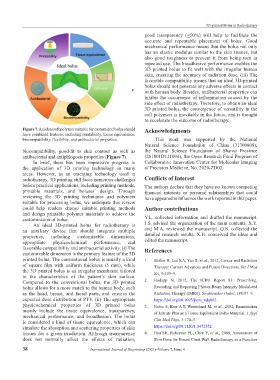
           Figure 7. An ideal soft polymer suitable for customized bolus should   Acknowledgments
           have combined features, including printability, tissue equivalence,
           biocompatibility, flexibility, and antibacterial properties.  This  work  was  supported  by  the  National
                                                               Natural  Science  Foundation  of  China  (31300808),
           biocompatibility,  good-fit  to  skin  contour  as  well  as   the  Natural  Science  Foundation  of  Shanxi  Province
           antibacterial and antiphlogosis properties (Figure 7).  (201801D121094), the Open Research Fund Program of
               In brief, there has been impressive progress  in   Collaborative Innovation Center for Molecular Imaging
           the  application  of  3D printing technology  in  many   of Precision Medicine, No. 2020-ZD02.
           areas.  However,  as  an  emerging  technology  used  in
           radiotherapy, 3D printing still faces numerous challenges   Conflicts of Interest
           before practical applications, including printing methods,   The authors declare that they have no known competing
           printable  materials,  and  boluses’  design.  Through   financial  interests  or  personal  relationships  that  could
           reviewing the 3D printing techniques and polymers   have appeared to influence the work reported in this paper.
           suitable for processing bolus, we anticipate this review
           could help readers choose suitable printing methods   Author contributions
           and  design  printable  polymer  materials  to  achieve  the
           customization of bolus.                             Y.L.  collected  information  and  drafted  the  manuscript.
               An ideal 3D-printed bolus for radiotherapy is   J.S. advised the organization of the main contents. X.Y.
           an auxiliary device that should integrate multiple   and  M.A.  reviewed  the  manuscript.  Q.S.  collected  the
           properties,   including   customizable   dimensions,   detailed research results. X.H. conceived the ideas and
           appropriate  physicochemical  performance,  and     edited the manuscript.
           favorable compatibility and antibacterial activity. (i) The   References
           customizable dimension is the primary feature of the 3D
           printed bolus. The conventional bolus is usually a kind   1.   Baskar R, Lee KA, Yeo R, et al., 2012, Cancer and Radiation
           of  square  film  with  uniform  thickness  (5  mm),  while   Therapy: Current Advances and Future Directions. Int J Med
           the 3D printed bolus is an irregular membrane tailored   Sci, 9:193–9.
           to  the  characteristics  of  the  patient’s  skin  surface.
           Compared to the conventional bolus, the 3D printed   2.   Hodapp  N,  2012,  The  ICRU  Report  83:  Prescribing,
           bolus allows for a more match to the human body, such   Recording and Reporting Photon-Beam Intensity-Modulated
           as  the  head,  breast,  and  facial  parts,  and  ensures  the   Radiation Therapy (IMRT). Strahlenther Onkol, 188:97–9.
           expected dose distribution at PTV. (ii) The appropriate      https://doi.org/10.1093/jicru_ndq002
           physicochemical properties of 3D printed bolus      3.   Babic S, Kerr A T, Westerland M, et al., 2002, Examination
           mainly include the tissue equivalence, transparency,    of Jeltrate Plus as a Tissue Equivalent Bolus Material. J Appl
           mechanical  performance,  and  bioadhesion.  The  bolus   Clin Med Phys, 3:170–5.
           is considered a kind of tissue equivalence, which can
           simulate the absorption and scattering properties of skin      https://doi.org/10.1120/1.1471552
           tissues  for  a  given  irradiation. Although  transparency   4.   Hsu SH, Roberson PL, Chen Y, et al., 2008, Assessment of
           does  not  normally  affect  the  effects  of  radiation,   Skin Dose for Breast Chest Wall Radiotherapy as a Function

           38                          International Journal of Bioprinting (2021)–Volume 7, Issue 4

