


Page 76 - IJB-7-4
P. 76
Bioink for Reconstruction of Rigid-living Systems
           The  rise  in  the orange  box, at  50  ppm,  and  the  green   integration  as the methacrylate  ions can be observed
           box, between 35 and 25  ppm, disappears when there   between 6 and 6.5 ppm [28,29].
           are bioceramics; therefore, these signals are a piece of   In the  TGA (Figure  5A), there is a reduction
           evidence from the interaction of binding from inorganic   of 13% of weight from 90°C to 100°C due to the loss
           components of calcium, phosphate, and carbonate ions to   of H O-coordinated  ions remaining  in the crystalline
                                                                   2
           the biopolymer side from the formulation. This data can   arrangements of ceramics compressed with the polymer.
           be corroborated in future studies with  P MAS NMR and   From 100°C to 642°C, there is a loss of 10% from the
                                          31
           43 Ca MAS NMR [27,28] . Besides, in  H-NMR (Figure S6), it   sample, equivalent to the biopolymers that were calcined
                                      1
           can be complemented the presence of the methacrylation   under this procedure; this variation  comes from the
           functionalization  of  the  GelMA  synthesis  and  PEGDA   different  polymeric  ionic/photo-crosslinking  behaviors
            A                                B                               C


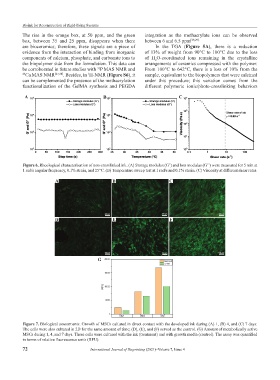
           Figure 6. Rheological characterization of non-crosslinked ink. (A) Storage modulus (G’) and loss modulus (G’’) were measured for 5 min at
           1 rad/s angular frequency, 0.1% strain, and 25°C. (B) Temperature sweep test at 1 rad/s and 0.1% strain. (C) Viscosity at different shear rates.

                         A                       B                       C


                        D                        E                       F


                                           G


           Figure 7. Biological assessments. Growth of MSCs cultured in direct contact with the developed ink during (A) 1, (B) 4, and (C) 7 days.
           The cells were also cultured in 2D for the same amount of time; (D), (E), and (F) served as the control. (G) Amount of metabolically active
           MSCs during 1, 4, and 7 days. These cells were cultured with the ink (treatment) and with growth media (control). The assay was quantified
           in terms of relative fluorescence units (RFU).

           72                          International Journal of Bioprinting (2021)–Volume 7, Issue 4

