


Page 467 - IJB-9-2
P. 467
International Journal of Bioprinting                                            Bioprinting of exosomes


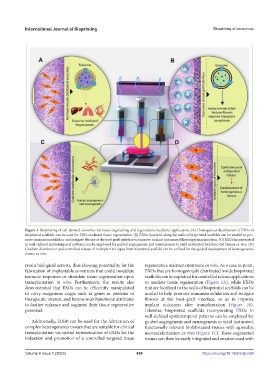
            Figure 1. Bioprinting of cell-derived exosomes for tissue engineering and regenerative medicine applications. (A) Homogenous distribution of EXOs in
            bioprinted scaffolds can be used for EXO-mediated tissue regeneration. (B) EXOs localized along the walls of bioprinted scaffolds can be availed to pro-
            mote immunomodulation and mitigate fibrosis at the host graft interface to improve implant outcomes following transplantation. (C) EXOs incorporated
            in well-defined spatiotemporal patterns can be employed for guided angiogenesis and neurogenesis to yield maturated biofabricated tissues ex vivo. (D)
            Gradient distribution and controlled release of multiple EXO types from bioprinted scaffold can be utilized for the guided development of heterogeneous
            tissues ex vivo.

            retain biological activity, thus showing potentiality for the   regenerative microenvironment in vivo. As a case in point,
            fabrication of implantable constructs that could modulate   EXOs that are homogenously distributed inside bioprinted
            immune responses or stimulate tissue regeneration upon   scaffolds can be exploited for controlled release applications
            transplantation  in vivo. Furthermore, the results also   to mediate tissue regeneration (Figure 1A), while EXOs
            demonstrated that EXOs can be efficiently manipulated   that are localized to the walls of bioprinted scaffolds can be
            to carry exogenous cargo, such as genes or proteins of   availed to help promote immunomodulation and mitigate
            therapeutic interest, and bestow multifunctional attributes   fibrosis at the host–graft interface, so as to improve
            to further enhance and augment their tissue regenerative   implant outcomes after transplantation (Figure  1B).
            potential.                                         Likewise, bioprinted scaffolds incorporating EXOs in
                                                               well-defined spatiotemporal patterns can be employed for
               Additionally, 3DBP can be used for the fabrication of   guided angiogenesis and neurogenesis to yield maturated,
            complex heterogeneous tissues that are suitable for clinical   functionally relevant biofabricated tissues with agreeable
            transplantation via spatial representation of EXOs for the   neovascularization ex vivo (Figure 1C). These engineered
            induction and promotion of a controlled targeted tissue   tissues can then be easily integrated and anastomosed with


            Volume 9 Issue 2 (2023)                        459                          https://doi.org/10.18063/ijb.690

