


Page 283 - IJB-9-3
P. 283
International Journal of Bioprinting                      3D-printed thermosensitive hydrogel based microrobots


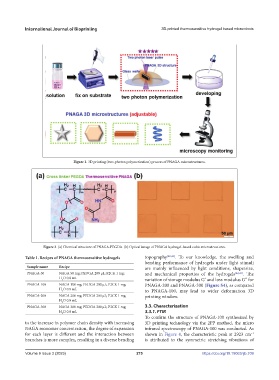
                                Figure 1. 3D printing (two-photon polymerization) process of PNAGA microstructures.


                    Figure 2. (a) Chemical structure of PNAGA-PEGDA. (b) Optical image of PNAGA hydrogel-based cubic microstructures.

            Table 1. Recipes of PNAGA thermosensitive hydrogels  topography [40,41] . To our knowledge, the swelling and
                                                               bending performance of hydrogels under light stimuli
             Sample name  Recipe                               are mainly influenced by light conditions, shape/size,
             PNAGA-50     NAGA 50 mg; PEDGA 200 μL; P2CK 1 mg;   and mechanical properties of the hydrogels [42,43] . The
                          H O 0.8 mL
                           2                                   variation of storage modulus G′ and loss modulus G″ for
             PNAGA-100    NAGA 100 mg; PEDGA 200 μL; P2CK 1 mg;   PNAGA-200 and PNAGA-300 (Figure S4), as compared
                          H O 0.8 mL
                           2                                   to PNAGA-100, may lead to wider deformation 3D
             PNAGA-200    NAGA 200 mg; PEDGA 200 μL; P2CK 1 mg;   printing window.
                          H O 0.8 mL
                           2
             PNAGA-300    NAGA 300 mg; PEDGA 200 μL; P2CK 1 mg;   3.3. Characterization
                          H O 0.8 mL                           3.3.1. FTIR
                           2
                                                               To confirm the structure of PNAGA-100 synthesized by
            to the increase in polymer chain density with increasing   3D printing technology via the 2PP method, the micro
            NAGA monomer concentration, the degree of expansion   infrared spectroscopy of PNAGA-100 was conducted. As
            for each layer is different and the interaction between   shown in  Figure 4, the characteristic peak at 2923 cm
                                                                                                            −1
            branches is more complex, resulting in a diverse bending   is attributed to the symmetric stretching vibrations of

            Volume 9 Issue 3 (2023)                        275                         https://doi.org/10.18063/ijb.709

