


Page 238 - IJB-9-6
P. 238
International Journal of Bioprinting                                     Bioprinting in diabetic foot disease


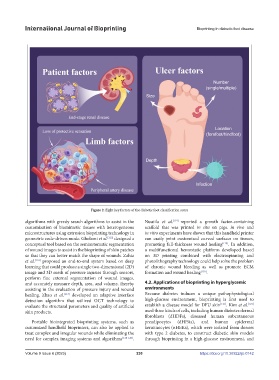
                                        Figure 2. Eight key factors of the diabetic foot classification score

            algorithms with greedy search algorithms to assist in the   Nuutila  et al. [119]  reported a growth factor-containing
            customization  of  biomimetic  tissues  with  heterogeneous   scaffold that was printed  in situ on pigs.  In vivo and
            microstructures using extrusion bioprinting technology in   in vitro experiments have shown that this handheld printer
            geometric code-driven mode. Gholami et al. [115]  designed a   can easily print customized curved surfaces on tissues,
            conceptual tool based on the semiautomatic segmentation   promoting full-thickness wound healing [119] . In addition,
            of wound images to assist in the bioprinting of skin patches   a multifunctional hemostatic platform developed based
            so that they can better match the shape of wounds. Zahia   on 3D printing combined with electrospinning and
            et  al. [116]  proposed an end-to-end system based on deep   photolithography technology could help solve the problem
            learning that could produce a single two-dimensional (2D)   of chronic wound bleeding as well as promote ECM
            image and 3D mesh of pressure injuries through sensors,   formation and wound healing [120] .
            perform fine external segmentation of wound images,
            and accurately measure depth, area, and volume, thereby   4.2. Applications of bioprinting in hyperglycemic
            assisting in the evaluation of pressure injury and wound   environments
            healing.  Zhao  et  al. [117]   developed  an  adaptive  interface   Because  diabetes  induces  a  unique  pathophysiological
            detection algorithm that utilized OCT technology to   high-glucose environment, bioprinting is first used to
            evaluate the structural parameters and quality of artificial   establish a disease model for DFU skin [121] . Kim et al. [122]
            skin products.                                     used three kinds of cells, including human diabetes dermal
                                                               fibroblasts (dHDFs), diseased human subcutaneous
               Portable biointegrated bioprinting systems, such as   preadipocytes  (dHPAs),  and  human  epidermal
            customized handheld bioprinters, can also be applied to   keratinocytes (nHEKs), which were isolated from donors
            treat complex and irregular wounds while eliminating the   with  type  2  diabetes,  to  construct  diabetic  skin models
            need for complex imaging systems and algorithms [118-120] .   through bioprinting in a high-glucose environment, and


            Volume 9 Issue 6 (2023)                        230                        https://doi.org/10.36922/ijb.0142

