


Page 240 - IJB-9-6
P. 240
International Journal of Bioprinting                                     Bioprinting in diabetic foot disease


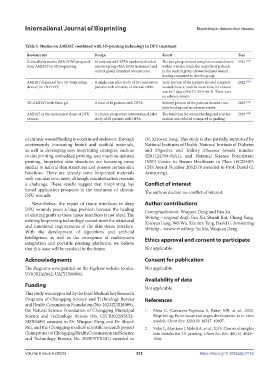
            Table 3. Studies on AMHAT combined with 3D-printing technology in DFU treatment
             Biomaterials                Design                       Result                           Year
             Extracellular matrix (MA-ECM) prepared   40 subjects with DFUs randomly divided   The test group showed complete wound closure   2021  [140]
             from AMHAT by 3D bioprinting  into test group (MA-ECM treatment) and   within 4 weeks, while the majority of patients
                                         control group (standard wound care)  in the control group showed delayed wound
                                                                      healing compared to the test group.
             AMHAT dispensed by a 3D-bioprinting   A single-arm pilot study of 10 consecutive   Sixty percent of the patients showed complete   2022  [141]
             device (Dr. INVIVO)         patients with a history of chronic DFUs  wound closure, and the mean time for closure
                                                                      was 49.1 days (95% CI: 29.9–68.3). There were
                                                                      no adverse events.
             3D-AMHAT with fibrin gel    A total of 10 patients with DFUs  Seventy percent of the patients showed com-  2023  [139]
                                                                      plete healing and no adverse events.
             AMHAT in the customized shape of DFU   A clinical prospective interventional pilot   The total time for wound healing and scar for-  2023  [138]
             wounds                      study of 20 patients with DFUs  mation was reduced compared to grafting.


            of chronic wound healing is a continued endeavor. Through   Dr. Xiaoyan Jiang. This study is also partially supported by
            continuously innovating bioink and scaffold materials,   National Institutes of Health, National Institute of Diabetes
            as well as developing new bioprinting strategies, such as   and Digestive and Kidney Diseases (award number
            in situ printing, embedded printing, and machine-assisted   1R01124789-01A1), and National Science Foundation
            printing, bioprinted skin  structures are  becoming  more   (NSF) Center to Stream Healthcare in Place (#C2SHiP;
            similar to natural skin structures and possess certain skin   CNS Award Number 2052578 awarded to Prof. David G.
            functions. There are already some bioprinted materials   Armstrong).
            with vascular structures, although vascularization remains
            a challenge. These results suggest that bioprinting has   Conflict of interest
            broad application prospects in the treatment of chronic   The authors declare no conflict of interest.
            DFU wounds.
               Nevertheless, the repair of tissue interfaces in deep   Author contributions
            DFU wounds poses a huge problem because the healing   Conceptualization: Wuquan Deng and Fan Xu
            of existing grafts at these tissue interfaces is not ideal. The   Writing – original draft: Fan Xu, Shunli Rui, Cheng Yang,
            existing bioprinting technology cannot meet the structural   Xiaoyan Jiang, Wei Wu, Xianlun Tang, David G. Armstrong
            and functional requirements of the skin tissue interface.   Writing – review & editing: Yu Ma, Wuquan Deng
            With  the development  of algorithms  and  artificial
            intelligence, as well as the emergence of multisystem   Ethics approval and consent to participate
            integration and portable printing platforms, we believe
            that this issue will be resolved in the future.    Not applicable.

            Acknowledgments                                    Consent for publication
            The diagrams were painted on the Figdraw website (codes:   Not applicable.
            UOORUe2842; UAIYUbb908).
                                                               Availability of data
            Funding
                                                               Not applicable.
            This study was supported by the Joint Medical Key Research
            Programs of Chongqing Science and Technology Bureau   References
            and Health Commission Foundation (No. 2023ZDXM009),
            the Natural Science Foundation of Chongqing Municipal   1.   Mota C, Camarero-Espinosa S, Baker MB,  et al., 2020,
            Science  and  Technology  Bureau  (No.  CSTB2022NSCQ-  Bioprinting: From tissue and organ development to in vitro
            MSX0489) awarded to Dr. Wuquan Deng and Dr. Shunli    models. Chem Rev, 120(19): 10547–10607.
            Rui, and the Chongqing medical scientific research project   2.   Valot L, Martinez J, Mehdi A, et al., 2019, Chemical insights
            (Joint project of Chongqing Health Commission and Science   into bioinks for 3D printing. Chem Soc Rev, 48(15): 4049–
            and  Technology  Bureau, No.  2020FYYX241)  awarded  to   4086.


            Volume 9 Issue 6 (2023)                        232                        https://doi.org/10.36922/ijb.0142

