


Page 197 - IJOCTA-15-4
P. 197
FastLoader: Leveraging large language models to accelerate cargo loading optimization with numerous


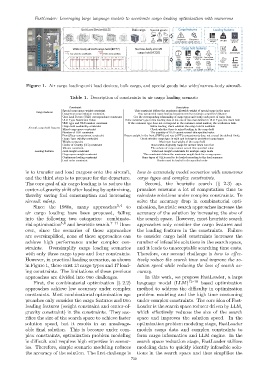
             Figure 1. Air cargo loading:unit load devices, bulk cargo, and special goods into wide/narrow-body aircraft.

                                Table 1. Description of constraints in air cargo loading scenario


                                Constraint                                     Description
                             Special cargo space weight constraint  This constraint defines the maximum allowable weight of special cargo in the space
                 Cargo features
                             Dangerous cargo isolation constraint  Any two special cargo loading locations need to maintain a specified distance
                             Unit Load Device (ULD) correspondence constraint  Get the corresponding relationship of cargo types and verify each piece of cargo data
                             ULD Type Restriction Rules  If the container type in the loading data is not one of the ones defined in ULD Type, the check fails
                             ULD type and ULD number constraint  If the container type does not correspond to the container serial number, the verification fails.
                             Cargo hold availability constraint     Before loading, check whether the cargo hold is available
              Aircraft cargo hold features
                             Mixed cargo space constraint           Check whether there is mixed loading in the cargo hold
                             Number of ULD constraint               The quantity of ULD cannot exceed this specified value
                             Front/Rear compartment constraint  Ensure weight in the front (FWD) and rear (AFT) compartments does not exceed the defined limits.
                             Cargo Type validity constraint    Check whether cargo type is valid and belongs to predefined cargo types.
                             Weight constraint                          Maximum load weight of the cargo hold
                             Center of Gravity (CG) constraint      Ideal center-of-gravity range for airliner when zero fuel
                             Volume constraint                      The volume of cargo cannot exceed this specified value
                Loading features  Joint weight constraint           Total load weight constraints for multiple cargo holds
                             Cargo space weight constraint       This constraint defines the maximum weight limit for a cargo space.
                             Continuous loading constraint      Some types of ULDs need to be loaded according to the load sequence
                             Load order constraint                     Goods must be loaded in the specified order
            is to transfer and load cargoes onto the aircraft,  how to accurately model scenarios with numerous
            and the third step is to prepare for the departure.  cargo types and complex constraints.
            The core goal of air cargo loading is to reduce the   Second, the heuristic search (§ 2.3) ap-
            center-of-gravity shift after loading by optimizing,  proaches consume a lot of computation time to
            thereby saving fuel consumption and increasing    calculate solutions under complex constraints. To
            aircraft safety.                                  solve the accuracy drop in combinatorial opti-
                Since the 1980s, many approaches     3,4  to  mization, heuristic search approaches increase the
            air cargo loading have been proposed, falling     accuracy of the solution by increasing the size of
            into the following two categories:   combinato-   the search space. However, most heuristic search
            rial optimization 5,6  and heuristic search. 7–11  How-  approaches only consider the cargo features and
            ever, since the scenarios of these approaches     the loading features in the constraints. Failure
            are oversimplified, none of these approaches can  to consider cargo hold constraints increases the
            achieve high performance under complex con-       number of infeasible solutions in the search space,
            straints.  Oversimplify cargo loading scenarios   and it leads to unacceptable searching time costs.
            with only three cargo types and four constraints.  Therefore, our second challenge is how to effec-
            However, in practical loading scenarios, as shown  tively reduce the search time and improve the so-
            in Figure 1, there exist 13 cargo types and 17 load-  lution speed while reducing the loss of search ac-
            ing constraints. The limitations of these previous  curacy.
            approaches are divided into two challenges.           In this work, we propose FastLoader, a large
                First, the combinatorial optimization (§ 2.2)  language model (LLM)  12–18  based optimization
            approaches achieve low accuracy under complex     method to address the difficulty in optimization
            constraints. Most combinatorial optimization ap-  problem modeling and the high time consuming
            proaches only consider the cargo features and two  under complex constraints. The core idea of Fast-
            loading features (weight constraint and center-of-  Loader is the search space reducer driven by LLM,
            gravity constraint) in the constraints. They sac-  which effectively reduces the size of the search
            rifice the size of the search space to achieve faster  space and improves the solution speed. In the
            solution speed, but it results in an unsalvage-   optimization problem modeling stage, FastLoader
            able final solution. This is because under com-   models cargo data and complex constraints to
            plex constraints, optimization problem modeling   form cargo information and LLM engine. In the
            is difficult and requires high expertise in scenar-  search space reduction stage, FastLoader utilizes
            ios. Therefore, simple scenario modeling reduces  modeling data to quickly identify infeasible solu-
            the accuracy of the solution. The first challenge is  tions in the search space and thus simplifies the
                                                           739

