


Page 199 - IJOCTA-15-4
P. 199
FastLoader: Leveraging large language models to accelerate cargo loading optimization with numerous


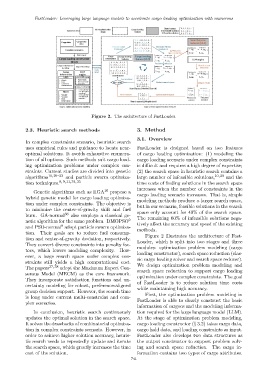
                                          Figure 2. The architecture of FastLoader.


            2.3. Heuristic search methods                     3. Method
                                                              3.1. Overview
            In complex constraints scenario, heuristic search
            uses empirical rules and guidance to locate near-  FastLoader is designed based on two features
            optimal solutions. It avoids exhaustive enumera-  of cargo loading optimization: (1) modeling the
            tion of all options. Such methods suit cargo load-  cargo loading scenario under complex constraints
            ing optimization problems under complex con-      is difficult and requires a high degree of expertise;
            straints. Current studies are divided into genetic  (2) the search space in heuristic search contains a
            algorithms 10,29–33  and particle swarm optimiza-  large number of infeasible solutions, 10,29  and the
            tion techniques. 8,9,11,34,35                     time costs of finding solutions in the search space
                                                              increases when the number of constraints in the
                Genetic algorithms such as HGA 10  propose a  cargo loading scenario increases. That is, simple
            hybrid genetic model for cargo loading optimiza-
                                                              modeling methods produce a larger search space,
            tion under complex constraints. The objective is
                                                              but in our scenario, feasible solutions in the search
            to minimize the center-of-gravity shift and fuel  space only account for 40% of the search space.
            burn. GA-normal   36  also employs a classical ge-  The remaining 60% of infeasible solutions nega-
            netic algorithm for the same problem. DMOPSO  9   tively affect the accuracy and speed of the existing
                            8
            and PSO-normal adopt particle swarm optimiza-
                                                              methods.
            tion. Their goals are to reduce fuel consump-
                                                                  Figure 2 illustrates the architecture of Fast-
            tion and center-of-gravity deviation, respectively.
                                                              Loader, which is split into two stages and three
            They convert diverse constraints into penalty fac-  modules: optimization problem modeling (cargo
            tors, which lowers modeling complexity. How-
            ever, a large search space under complex con-     loading constructor), search space reduction (clas-
            straints still yields a high computational cost.  sic cargo loading solver and search space reducer).
            The papers 37,38  adopt the Maximum Expert Con-   We design optimization problem modeling and
                                                              search space reduction to support cargo loading
            sensus Model (MECM) as the core framework.
                                                              optimization under complex constraints. The goal
            They incorporate satisfaction functions and un-
                                                              of FastLoader is to reduce solution time costs
            certainty modeling for robust, preference-aligned
                                                              while maintaining high accuracy.
            group decision support. However, the search time
            is long under current multi-constraint and com-       First, the optimization problem modeling in
            plex scenarios.                                   FastLoader is able to clearly construct the basic
                                                              information of cargoes and the modeling informa-
                In conclusion, heuristic search continuously  tion required for the large language model (LLM).
            updates the optimal solution in the search space.  At the stage of optimization problem modeling,
            It solves the drawbacks of combinatorial optimiza-  cargo loading constructor (§ 3.2) takes cargo data,
            tion in complex constraints scenario. However, in  cargo hold data, and loading constraints as input.
            order to achieve higher solution accuracy, heuris-  FastLoader also develops two data structures as
            tic search needs to repeatedly update and iterate  the output constructor to support problem solv-
            the search space, which greatly increases the time  ing and search space reduction. The cargo in-
            cost of the solution.                             formation contains two types of cargo attributes.
                                                           741

