


Page 234 - IJOCTA-15-4
P. 234
H. Kravitz et al. / IJOCTA, Vol.15, No.4, pp.750-778 (2025)


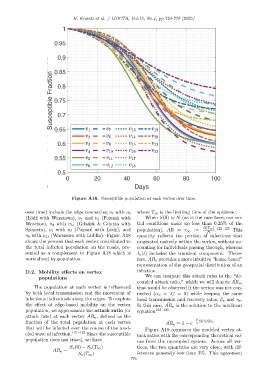
                                 Figure A16. Susceptible population at each vertex over time.


            over time) include the edge connecting v 7 with v 8  where T ∞ is the limiting time of the epidemic.
            ( L´od´z with Warszawa), v 1 and v 2 (Pozna´n with    When S(0) ≈ N (as is the case here; our ini-
            Wroc law), v 9 with v 13 (Gda´nsk & Gdynia with   tial conditions make up less than 0.25% of the
            Szczecin), v 1 with v 7 (Pozna´n with  L´od´z), and  population), AR ≈ r ∞ :=  R(T ∞) 123–125  This
                                                                                                 .
                                                                                             N
            v 8 with v 11 (Warszawa with Lublin). Figure A18  quantity reflects the portion of infections that
            shows the percent that each vertex contributed to  originated natively within the vertex, without ac-
            the total infected population on the roads, pre-  counting for individuals passing through, whereas
            sented as a complement to Figure A18 which is     I v (t) includes the transient component. There-
            normalized by population.                         fore, AR v provides a more intuitive “home-based”
                                                              representation of the geospatial distribution of an
            D.2. Mobility effects on vertex                   infection.
                                                                  We can compare this attack ratio to the “de-
                  populations
                                                                                                         ˜
                                                              coupled attack ratio,” which we will denote AR v ,
                The population at each vertex is influenced   that would be observed if the vertex was not con-
                                                                              v
            by both local transmission and the movement of    nected (α v = λ = 0) while keeping the same
                                                                              e
            infectious individuals along the edges. To explore  local transmission and recovery rates, β v and η v .
                                                                           ˜
            the effect of edge-based mobility on the vertex   In this case, AR v is the solution to the nonlinear
            population, we approximate the attack ratio (or   equation 123–125
            attack rate) at each vertex AR v , defined as the
                                                                                        β    ˜
                                                                            ˜
            fraction of the total population at each vertex                AR v = 1 − e − S(0)AR v
                                                                                        η
            that will be infected over the course of the mod-     Figure A19 compares the modeled vertex at-
            eled wave of infection. 121–123  Since the susceptible  tack ratios with the corresponding theoretical val-
            population does not travel, we have               ues from the uncoupled system. Across all ver-
                                S v (0) − S v (T ∞ )          tices, the two quantities are very close, with dif-
                        AR v =
                                    S v (T ∞ )                ferences generally less than 3%. This agreement
                                                           776

