


Page 45 - IMO-2-2
P. 45
Innovative Medicines & Omics                                           Alzheimer’s disease and clinical trials


                         A                                   B


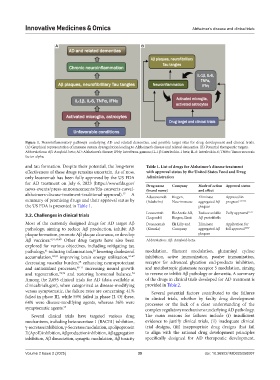
            Figure  1.  Neuroinflammatory pathways underlying AD and related dementias, and possible target sites for drug development and clinical trials.
            (A) Graphical representation of immune system dysregulation leading to Alzheimer’s disease and related dementias. (B) Potential therapeutic targets.
            Abbreviations: Aβ: Amyloid-beta; AD: Alzheimer’s disease; IFNγ: Interferon-gamma; IL-1β: Interleukin-1 beta; IL-6: Interleukin-6; TNFα: Tumor necrosis
            factor-alpha.
            and tau formation. Despite their potential, the long-term   Table 1. List of drugs for Alzheimer’s disease treatment
            effectiveness of these drugs remains uncertain. As of now,   with approval status by the United States Food and Drug
            only lecanemab has been fully approved by the US FDA   Administration
            for AD treatment on July 6, 2023 (https://www.fda.gov/  Drug name   Company  Mode of action  Approval status
            news-events/press-announcements/fda-converts-novel-  (brand name)        and effect
            alzheimers-disease-treatment-traditional-approval). 17  A  Aducanumab   Biogen,   Eliminate   Approval in
            summary of promising drugs and their approval status by   (Aduhelm)  Neurimmune  aggregated Aβ   progress 17,57,94
            the US FDA is presented in Table 1.                                      plaques
            3.2. Challenges in clinical trials                 Lecanemab   BioArctic AB,   Reduce soluble   Fully approved 17,57
                                                                          Biogen, Eisai
                                                               (Leqembi)
                                                                                     Aβ protofibrils
            Most of the currently designed drugs for AD target Aβ   Donanemab   Eli Lilly and   Eliminate   Application for
            pathology, aiming to reduce Aβ production, inhibit Aβ   (Kisunla)  Company  aggregated Aβ   full approval 17,57
            plaque formation, promote Aβ plaque clearance, or develop                plaques
            Aβ  vaccines. 6,57,59,60   Other drug targets  have  also  been   Abbreviation: Aβ: Amyloid-beta.
            explored for various objectives, including mitigating tau
            pathology,  reducing inflammation,  lowering cholesterol   modulation, filament modulation, glutaminyl cyclase
                                         28
                    61
            accumulation, 62,63  improving brain energy utilization, 64-67    inhibition, active immunization, passive immunization,
            decreasing vascular burden,  enhancing neuroprotectant   receptor for advanced glycation end-products inhibition,
                                  68
            and antioxidant processes, 69-71  increasing neural growth   and metabotropic glutamate receptor 5 modulation, aiming
            and regeneration, 72,73  and restoring hormonal balance.    to reverse or inhibit Aβ pathology or dementia. A summary
                                                         74
            Among the 2,695 clinical trials for AD (data available at   of the drugs in clinical trials developed for AD treatment is
            clinicaltrials.gov), when categorized as disease-modifying   provided in Table 2.
            versus symptomatic, the failure rates are concerning: 41%   Several potential factors contributed to the failures
            failed in phase III, while 59% failed in phase II. Of these,   in clinical trials, whether by faulty drug development
            64%  were disease-modifying agents,  whereas  36%  were   processes  or  the  lack  of  a  clear  understanding  of  the
            symptomatic agents. 54                             complex regulatory mechanisms underlying AD pathology.
              Several clinical trials have targeted various drug   The main reasons for failures include (i) insufficient
            mechanisms, including beta-secretase 1 (BACE1) inhibition,   evidence to justify clinical trials, (ii) inadequate clinical
            γ-secretase inhibition, γ-Secretase modulation, apolipoprotein   trial  designs,  (iii)  inappropriate  drug  designs  that  fail
            E (ApoE) inhibition, Aβ production inhibition, Aβ aggregation   to align with the rational drug development principles
            inhibition, Aβ dissociation, synaptic modulation, Aβ toxicity   specifically designed for AD therapeutic development,


            Volume 2 Issue 2 (2025)                         39                          doi: 10.36922/IMO025050007

