


Page 61 - IMO-2-2
P. 61
Innovative Medicines & Omics                                        Open source bioinformatics tools in Africa


                                                               monitor viral mutations in real-time, revealing the virus’s
                                                               adaptive capabilities and the emergence of potentially
                                                               more  virulent  strains. 44,45   Genetic  analyses  helped  map
                                                               out transmission routes, enabling authorities to trace
                                                               the origins and progression of outbreaks accurately. In
                                                               addition, insights from genomic data directly influenced
                                                               public health responses, optimizing contact tracing,
                                                               isolation, and quarantine protocols. 46
                                                                 A mutation in the glycoprotein gene GP-A82V emerged
                                                               as particularly concerning due to its association with
                                                               increased transmissibility. This discovery helped prioritize
                                                               containment efforts  in  high-risk  regions and  shaped
                                                               targeted interventions.
                                                               3.2.2. COVID-19 genomic surveillance (South Africa)

                                                               South Africa’s robust genomic surveillance, powered by
                                                               platforms like Global Initiative on Sharing All Influenza Data
                                                               (GISAID) and Nextstrain, has been pivotal in monitoring
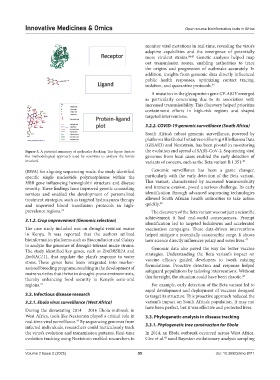
            Figure 3. A pictorial summary of molecular docking. The figure depicts   the evolution and spread of SARS-CoV-2. Sequencing viral
            the methodological approach used by scientists to analyze the bonds   genomes  from local cases enabled  the early  detection  of
            involved.                                          variants of concern, such as the Beta variant B.1.351. 47

            (BWA) for aligning sequencing reads, the study identified   Genomic surveillance has been a game changer,
            specific single nucleotide polymorphisms within the   particularly with the early detection of the Beta variant.
            HBB gene influencing hemoglobin structure and disease   This variant, characterized by increased transmissibility
            severity. These findings have improved genetic counseling   and immune evasion, posed a serious challenge. Its early
            services and  enabled  the development of  personalized   identification through advanced sequencing technologies
            treatment strategies, such as targeted hydroxyurea therapy   allowed South African health authorities to take action
            and improved blood transfusion protocols in high-  quickly. 48
            prevalence regions. 41                               The discovery of the Beta variant was not just a scientific
                                                               achievement; it had real-world consequences. Prompt
            3.1.2. Crop improvement (Genomic selection)
                                                               identification led to targeted lockdowns and accelerated
            The case study included was on drought-resistant maize   vaccination campaigns. These data-driven interventions
            in Kenya. It was reported that the authors utilized   helped mitigate a potentially catastrophic surge. It shows
            bioinformatics platforms such as Bioconductor and Galaxy   how science directly influences policy and saves lives. 47
            to analyze the genomes of drought-tolerant maize strains.   Genomic data also paved the way for better vaccine
            The study identified key genes, such as ZmDREB2A and   strategies. Understanding the Beta variant’s impact on
            ZmNAC111, that regulate the plant’s response to water   vaccine efficacy guided developers to tweak existing
            stress. These genes have been integrated into marker-  formulations. Proactive detection and response helped

            assisted breeding programs, resulting in the development of   safeguard populations by tailoring interventions. Without
            maize varieties that thrive in drought-prone environments,   this foresight, the situation could have been chaotic. 47
            thereby enhancing food security in Kenya’s semi-arid
            regions. 42                                          For example, early detection of the Beta variant led to
                                                               rapid development and deployment of vaccines designed
            3.2. Infectious disease research                   to target its structure. This proactive approach reduced the

            3.2.1. Ebola virus surveillance (West Africa)      variant’s impact on South Africa’s population. It may not
                                                               have been perfect, but it was effective and protected lives.
            During the devastating 2014 – 2016 Ebola outbreak in
            West Africa, tools like Nextstrain played a critical role in   3.3. Phylogenetic analysis in disease tracking
            real-time viral surveillance.  By sequencing genomes from
                                 43
            infected individuals, researchers could meticulously track   3.3.1. Phylogenetic tree construction for Ebola
            the virus’s evolution and transmission patterns. Real-time   In 2014, an Ebola outbreak occurred across West Africa.
            evolution tracking using Nextstrain enabled researchers to   Gire et al.  used Bayesian evolutionary analysis sampling
                                                                       43

            Volume 2 Issue 2 (2025)                         55                               doi: 10.36922/imo.8111

