


Page 64 - IMO-2-2
P. 64
Innovative Medicines & Omics                                        Open source bioinformatics tools in Africa


            Structural biology is not merely a theoretical pursuit; it is   and MAFFT offer cost-effective and scalable solutions
            an essential tool in the fight against disease. As illustrated   for African researchers. These tools have been crucial in
            in Figure 3, molecular docking workflows are more than   genomics research, disease tracking, drug discovery, and
            academic exercises; they represent a critical pathway   MD simulations, allowing local scientists to conduct high-
            toward developing treatments tailored to Africa’s disease   quality research without financial strain. 61,62
            burden.                                              For instance, during the Ebola and COVID-19

            3.6. Bioinformatics applications and findings in   outbreaks, Nextstrain played a pivotal role in the real-time
            resource-limited African settings                  tracking of viral mutations, which was critical for informing
                                                               public health responses. Similarly, AutoDock has facilitated
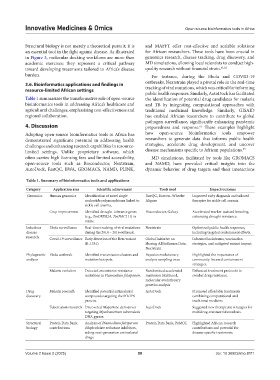
            Table 1 summarizes the transformative role of open-source   the identification of potential drug candidates for malaria
            bioinformatics tools in addressing Africa’s healthcare and   and TB by integrating computational approaches with
            agricultural challenges, emphasizing cost-effectiveness and   traditional medicinal knowledge. Similarly, GISAID
            regional collaboration.                            has enabled African researchers to contribute to global
                                                               pathogen surveillance, significantly enhancing pandemic
            4. Discussion                                      preparedness and  response.   These  examples  highlight
                                                                                      61
            Adopting open-source bioinformatics tools in Africa has   how  open-source  bioinformatics  tools  empower
            demonstrated significant potential in addressing health   researchers to generate data that informs public health
            challenges and enhancing research capabilities in resource-  strategies, accelerate drug development, and uncover
                                                                                                        63
            limited settings. Unlike proprietary software, which   disease mechanisms specific to African populations.
            often carries high licensing fees and limited accessibility,   MD simulations, facilitated by tools like GROMACS
            open-source  tools  such  as  Bioconductor,  Nextstrain,   and NAMD, have provided critical insights into the
            AutoDock,  FastQC,  BWA,  GROMACS,  NAMD,  PLINK,   dynamic behavior of drug targets and their interactions

            Table 1. Summary of bioinformatics tools and applications

            Category    Application area  Scientific achievement     Tools used           Impact/outcome
             Genomics  Human genomics  Identification of novel single   FastQC, Burrow–Wheeler   Improved early diagnosis and tailored
                                     nucleotide polymorphisms linked to   Aligner   therapies for sickle cell anemia.
                                     sickle cell anemia.
                      Crop improvement  Identified drought-tolerance genes   Bioconductor, Galaxy  Accelerated marker-assisted breeding,
                                     (e.g., ZmDREB2A, ZmNAC111) in                 enhancing drought resistance.
                                     maize.
            Infectious   Ebola surveillance  Real-time tracking of viral mutations   Nextstrain  Optimized public health responses,
            disease                  during the 2014 – 2016 outbreak.              including targeted containment efforts.
            research  Covid-19 surveillance Early detection of the Beta variant   Global Initiative on   Informed lockdowns, vaccination
                                     (B.1.351).                Sharing All Influenza Data,   strategies, and mitigated variant impact.
                                                               Nextstrain
            Phylogenetic  Ebola outbreak  Identified transmission clusters and   Bayesian evolutionary   Highlighted the importance of
            analysis                 mutation hotspots.        analysis sampling trees   community-focused containment
                                                                                   strategies.
                      Malaria evolution  Detected artemisinin-resistance   Randomized accelerated   Enhanced treatment protocols to
                                     mutations in Plasmodium falciparum.  maximum likelihood,   combat drug resistance.
                                                               molecular evolutionary
                                                               genetics analysis
            Drug      Malaria research  Identified potential antimalarial   AutoDock  Promoted affordable treatments
            discovery                compounds targeting the PfATP6                combining computational and
                                     protein.                                      traditional medicine.
                      Tuberculosis research Discovered rifapentine derivatives   AutoDock  Suggested new therapeutic strategies for
                                     targeting Mycobacterium tuberculosis          multidrug-resistant tuberculosis.
                                     DNA gyrase.
            Structural   Protein Data Bank   Analysis of Plasmodium falciparum   Protein Data Bank, PyMOL  Highlighted African research
            biology   contributions  dihydrofolate reductase inhibitors,           contributions and potential for
                                     aiding next-generation antimalarial           disease-specific treatments.
                                     drugs.


            Volume 2 Issue 2 (2025)                         58                               doi: 10.36922/imo.8111

