


Page 54 - ITPS-8-2
P. 54
INNOSC Theranostics and
            Pharmacological Sciences                                             Management of heart failure in Pakistan


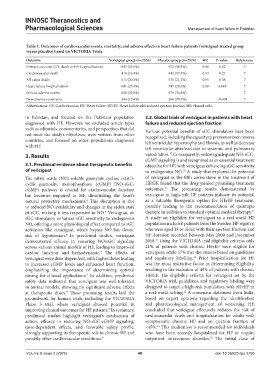
            Table 1. Outcomes of cardiovascular events, mortality, and adverse effects in heart failure patients (vericiguat‑treated group
            versus placebo) based on VICTORIA Trials
            Outcome                            Vericiguat group (n=2526)  Placebo group (n=2524)  HR  P‑value  References
            Primary outcome (CV death or HF hospitalization)  897 (35.5%)  972 (38.5%)  0.90  0.02       7
            Cardiovascular death                     414 (16.4%)         442 (17.5%)   0.92   0.27       7
            All-cause death                          513 (20.3%)         535 (21.2%)   0.95   0.38       7
            Heart failure hospitalization            691 (27.4%)         747 (29.6%)   0.90   0.048      7
            Serious adverse events                   828 (32.8%)         878 (34.8%)    -      -         7
            New anemia occurrence                    344 (13.6%)         266 (10.5%)    -    <0.001      7
            Abbreviations: CV: Cardiovascular; HF: Heart failure; HFrEF: Heart failure with reduced ejection fraction; HR: Hazard ratio.

            in Pakistan, and focused on the Pakistani population   3.2. Global trials of vericiguat in patients with heart
            diagnosed with HF. However, we excluded article types   failure and reduced ejection fraction
            such as editorials, commentaries, and perspectives that did   Various potential benefits of sGC stimulators have been
            not meet the study’s objectives, were written from other   recognized, including the capacity to prevent or even reverse
            countries, and focused on other populations diagnosed   left ventricular hypertrophy and fibrosis, as well as decrease
            with HF.
                                                               left ventricular afterload due to systemic and pulmonary
                                                                         10
            3. Results                                         vasodilation.  Consequently, restoring adequate NO-sGC-
                                                               cGMP signaling is and recognized as an essential treatment
            3.1. Preclinical evidence about therapeutic benefits   objective for HF, with vericiguat enhancing sGC sensitivity
            of vericiguat                                      to endogenous NO.  A study that explored the potential
                                                                               10
            The nitric oxide (NO)-soluble guanylate cyclase (sGC)-  of vericiguat as the fifth cornerstone in the treatment of
            cyclic guanosine monophosphate (cGMP) (NO-sGC-     HFrEF, found that the drug yielded promising treatment
                                                                       11
            cGMP) pathway is crucial for cardiovascular function   outcomes.  The promising results demonstrated by
            but becomes impaired in HF, diminishing the heart’s   vericiguat in high-risk HF patients indicate its potential
            natural protective mechanisms.  This disruption is due   as a valuable therapeutic option for HFrEF treatment,
                                      8
            to reduced NO availability and changes in the redox state   possibly leading to the recommendation of quintuple
                                                                                                            11
            of sGC, making it less responsive to NO.  Vericiguat, an   therapy, in addition to standard optimal medical therapy.
                                              8
            sGC stimulator, enhances sGC sensitivity to endogenous   A study on eligibility for vericiguat in a real-world HF
            NO, offering a more physiological effect compared to sGC   population included patients from the Sweden HF registry,
            activators like cinaciguat, which bypass NO but elevate   who were aged 18 or older, with their ejection fraction and
            risk of  hypotension.  In preclinical studies,  vericiguat   HF duration recorded between May 2000 and December
                             8
            demonstrated efficacy in restoring NO/sGC signaling   2018.  Using the VICTORIA trial eligibility criteria, only
                                                                   12
            across various animal models of HF, leading to improved   21% of patients with chronic HFrEF were eligible for
            cardiac function and hemodynamic.  The effects of   vericiguat, while 47% met the criteria based on guidelines
                                            9
                                                                                   12
            vericiguat were dose-dependent, with higher doses leading   and regulatory labelling.  Prior hospitalization for HF
            to increased cGMP levels and enhanced heart function,   was the most restrictive factor in determining eligibility,
            emphasizing the importance of determining optimal   resulting in the exclusion of 49% of patients with chronic
            dosing for clinical applications.  In addition, preclinical   HFrEF. The eligibility criteria for vericiguat set by the
                                      9
            safety data indicated that vericiguat was well-tolerated   VICTORIA trial, guidelines, and regulatory labeling were
            in animal models, showing no significant adverse effects   designed to target a high-risk population with HFrEF in
            at therapeutic doses.  These promising results laid the   a real-world setting.  A consensus statement from India,
                                                                               12
                             9
            groundwork for human trials, including the VICTORIA   based on expert opinions regarding the identification
            Phase 3 trial, where vericiguat showed potential in   and pharmacological management of worsening HF,
            improving clinical outcomes for HF patients.  In summary,   concluded  that  vericiguat  effectively  reduces  the  risk  of
                                               9
            preclinical studies highlight vericiguat’s mechanism of   cardiovascular death and hospitalization for adults with
            action, efficacy in restoring NO-sGC-cGMP signaling,   symptomatic chronic HF and an ejection fraction of
            dose-dependent  effects,  and  favorable  safety  profile,   <45%.  This medication is recommended for individuals
                                                                    13
            strongly supporting its therapeutic role in chronic HF and   who have been recently hospitalized for HF or require
            possibly other cardiovascular conditions. 9        outpatient intravenous diuretics.  The initial dose of
                                                                                          13

             Volume 8 Issue 2 (2025)                        48                               doi: 10.36922/itps.3756

