


Page 35 - JCAU-5-3
P. 35
Journal of Chinese
            Architecture and Urbanism                                           Walkability evaluation of Beijing Old Town


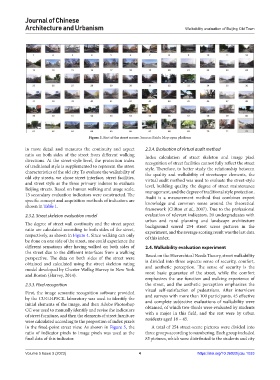
                                       Figure 3. Part of the street scenes. Source: Baidu Map open platform

            in more detail and measures the continuity and aspect   2.3.4. Evaluation of virtual audit method
            ratio on both sides of the street from different walking   Index calculation of street skeleton and image pixel
            directions. At the street-style level, the protection index   recognition of street facilities cannot fully reflect the street
            of traditional style is supplemented to represent the street   style. Therefore, to better study the relationship between
            characteristics of the old city. To evaluate the walkability of   the quality and walkability of streetscape elements, the
            old city streets, we chose street interface, street facilities,   virtual audit method was used to evaluate the street-style
            and street style as the three primary indexes to evaluate   level, building quality, the degree of street maintenance
            Beijing streets. Based on human walking and usage scale,   management, and the degree of traditional style protection.
            13 secondary evaluation indicators were constructed. The   Audit is a measurement method that combines expert
            specific concept and acquisition methods of indicators are   knowledge and common sense around the theoretical
            shown in Table 1.
                                                               framework (Clifton et al., 2007). Due to the professional
            2.3.2. Street skeleton evaluation model            evaluation of relevant indicators, 20 undergraduates with
                                                               urban and rural planning and landscape architecture
            The degree of street wall continuity and the street aspect   background scored 254 street scene pictures in the
            ratio are calculated according to both sides of the street,   experiment, and the average scoring result was the last data
            respectively, as shown in Figure 4. Since walking can only   of this index.
            be done on one side of the street, one could experience the
            different sensations after having walked on both sides of   2.4. Walkability evaluation experiment
            the street due to the different interfaces from a walking   Based on the Hierarchical Needs Theory, street walkability
            perspective. The data on both sides of the street were
            obtained and calculated using the street skeleton rating   is divided into three aspects: sense of security, comfort,
            model developed by Chester Wallag Harvey in New York   and aesthetic perception. The sense of security is the
            and Boston (Harvey, 2014).                         most basic guarantee of the street, while the comfort
                                                               emphasizes the use function and walking experience of
            2.3.3. Pixel recognition                           the street, and the aesthetic perception emphasizes the
                                                               visual self-satisfaction of pedestrians. After interviews
            First, the image semantic recognition software provided   and surveys with more than 100 participants, 45 effective
            by the CUG.HPSCIL laboratory was used to identify the   and complete subjective evaluations of walkability were
            initial elements of the image, and then Adobe Photoshop
            CC was used to manually identify and revise the indicators   obtained, of which two-thirds were evaluated by students
            of street furniture, and then the elements of street furniture   with a major in  this  field,  and the  rest  were by  urban
            were calculated according to the proportion of index pixels   residents aged 18 – 45.
            in the fixed-point street view. As shown in Figure 5, the   A total of 254 street-scene pictures were divided into
            ratio of indicator pixels to image pixels was used as the   three groups according to numbering. Each group included
            final data of this indicator.                      85 pictures, which were distributed to the students and city


            Volume 5 Issue 3 (2023)                         4                        https://doi.org/10.36922/jcau.1033

