


Page 36 - JCAU-5-3
P. 36
Journal of Chinese
            Architecture and Urbanism                                           Walkability evaluation of Beijing Old Town


            Table 1. Concept and data source of street walkability index
             First-order   Number  Secondary index   Index concept                       Data source
             index
            Street       01    Street width         Road red line width                 Road source data property sheet
            interface                                                                   downloaded OpenStreetMap
                         02    Average building height  Average height of buildings on both sides of street  Street view picture
                               Street aspect ratio  Ratio of one side building to road width  Single side building height/
                         03    Higher side street aspect ratio                          street width
                         04    Lower side street aspect ratio
                               Street continuity    The ratio of the length of the building interface to the   Continuous length of unilateral
                         05    Street wall continuity, more   length of the street within 200 m on one side of the   building /200 m
                               continuity side      street
                         06    Street wall continuity, less
                               continuity side
            Street       07    Motorway             Bike lanes are one of the street components in   Street view image semantic
            furniture                               pedestrian-friendly scale           segmentation, elements of the
                         08    Fence                Iron fence between motorway and non-motorway  street view map area
                         09    Green barrier        Isolation green belt between two-way traffic lanes and
                                                    between motor vehicles and non-motor vehicles
                         10    Street sign          The sign facility appears in the street view image
            Street style  11   Architectural quality and   Evaluation is carried out on the standards such as   Virtual audit method
                               design aesthetics    the unity of architectural color, construction age and
                                                    building height in street view pictures
                         12    The extent of street   The number of garbage cans in the street view, the
                               maintenance management  level of cleanliness of the street, and whether the
                                                    motor vehicle parking is orderly were evaluated
                         13    The degree of preservation of   How many traditional elements of street view,
                               traditional features  attractiveness, and other standards for evaluation


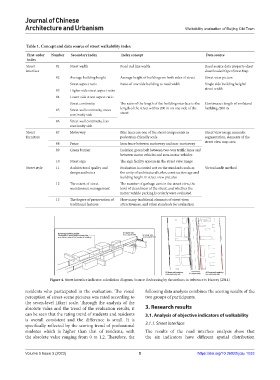
                      Figure 4. Street interface indicator calculation diagram. Source: Redrawing by the authors in reference to Harvey (2014)
            residents  who  participated  in  the  evaluation.  The  visual   following data analysis combines the scoring results of the
            perception of street-scene pictures was rated according to   two groups of participants.
            the seven-level Likert scale. Through the analysis of the
            absolute value and the trend of the evaluation results, it   3. Research results
            can be seen that the rating trend of students and residents   3.1. Analysis of objective indicators of walkability
            is overall consistent and the difference is small. It is
            specifically reflected by the scoring trend of professional   3.1.1. Street interface
            students which is higher than that of residents, with   The results of the road interface analysis show that
            the absolute value ranging from 0 to 1.2. Therefore, the   the six indicators have different spatial distribution


            Volume 5 Issue 3 (2023)                         5                        https://doi.org/10.36922/jcau.1033

