


Page 43 - JCAU-7-2
P. 43
Journal of Chinese
            Architecture and Urbanism                                       Moisture damage in plastered heritage building


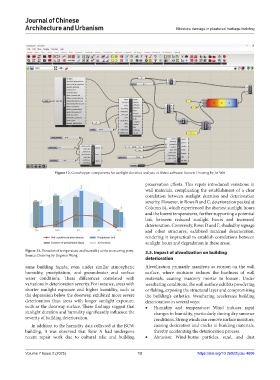
                        Figure 12. Grasshopper components for sunlight duration analysis in Rhino software. Source: Drawing by Jie Wei

                                                               preservation efforts. This repair introduced variations in
                                                               wall materials, complicating the establishment of a clear
                                                               correlation between sunlight duration and deterioration
                                                               severity. However, in Rows B and C, deterioration peaked at
                                                               Column 14, which experienced the shortest sunlight hours
                                                               and the lowest temperatures, further supporting a potential
                                                               link between reduced sunlight hours and increased
                                                               deterioration. Conversely, Rows D and E, shaded by signage
                                                               and other structures, exhibited minimal deterioration,
                                                               rendering it impractical to establish correlations between
                                                               sunlight hours and degradation in these areas.
            Figure 13. Variation of temperature and humidity at the measuring point.   3.3. Impact of alveolization on building
            Source: Drawing by Jingwen Wang
                                                               deterioration
            same building façade, even under similar atmospheric   Alveolization primarily manifests as erosion on the wall
            humidity,  precipitation,  and  groundwater  and  surface   surface, where moisture reduces the hardness of wall
            water  conditions.  These  differences  correlated  with   materials, causing masonry mortar to loosen. Under
            variations in deterioration severity. For instance, areas with   weathering conditions, the wall surface exhibits powdering
            shorter sunlight exposure and higher humidity, such as   or flaking, exposing the structural layer and compromising
            the depression below the doorway, exhibited more severe   the building’s esthetics. Weathering accelerates building
            deterioration than areas with longer sunlight exposure,   deterioration in several ways:
            such as the doorway surface. These findings suggest that   •   Humidity and temperature: Wind induces rapid
            sunlight duration and humidity significantly influence the   changes in humidity, particularly during dry summer
            severity of building deterioration.                   conditions. Strong winds can remove surface moisture,
              In addition to the humidity data collected at the BCW   causing desiccation and cracks in building materials,
            building, it was observed that Row A had undergone    thereby accelerating the deterioration process.
            recent repair work due to cultural relic and building   •   Abrasion: Wind-borne particles, sand, and dust


            Volume 7 Issue 2 (2025)                         13                       https://doi.org/10.36922/jcau.4606

