


Page 67 - JCBP-3-1
P. 67
Journal of Clinical and
            Basic Psychosomatics                                                           Protein and sleep problem


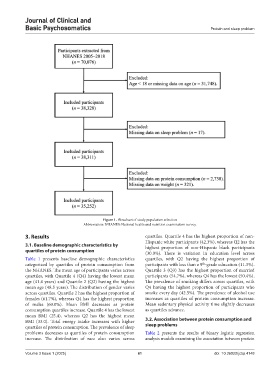
                                             Figure 1. Flowchart of study population selection
                                    Abbreviation: NHANES: National health and nutrition examination survey.

            3. Results                                         quartiles. Quartile 4 has the highest proportion of non-
                                                               Hispanic white participants (42.3%), whereas Q2 has the
            3.1. Baseline demographic characteristics by       highest proportion of non-Hispanic black participants
            quartiles of protein consumption                   (30.0%). There is variation in education level across
            Table  1 presents baseline demographic characteristics   quartiles, with Q2 having the highest proportion of
                                                                                       th
            categorized by quartiles of protein consumption from   participants with less than a 9 -grade education (11.3%).
            the NHANES. The mean age of participants varies across   Quartile 3 (Q3) has the highest proportion of married
            quartiles, with Quartile 4 (Q4) having the lowest mean   participants (54.7%), whereas Q4 has the lowest (50.4%).
            age (41.4 years) and Quartile 2 (Q2) having the highest   The prevalence of smoking differs across quartiles, with
            mean age (48.5 years). The distribution of gender varies   Q4 having the highest proportion of participants who
            across quartiles. Quartile 2 has the highest proportion of   smoke every day (42.5%). The prevalence of alcohol use
            females (61.7%), whereas Q4 has the highest proportion   increases as quartiles of protein consumption increase.
            of males (60.0%). Mean BMI decreases as protein    Mean sedentary physical activity time slightly decreases
            consumption quartiles increase. Quartile 4 has the lowest   as quartiles advance.
            mean BMI (25.4), whereas Q2 has the highest mean
            BMI (33.0). Total energy intake increases with higher   3.2. Association between protein consumption and
            quartiles of protein consumption. The prevalence of sleep   sleep problems
            problems decreases as quartiles of protein consumption   Table  2  presents the results  of binary  logistic regression
            increase. The distribution of race also varies across   analysis models examining the association between protein


            Volume 3 Issue 1 (2025)                         61                              doi: 10.36922/jcbp.4148

