


Page 70 - JCBP-3-1
P. 70
Journal of Clinical and
            Basic Psychosomatics                                                           Protein and sleep problem


                         A                                     B


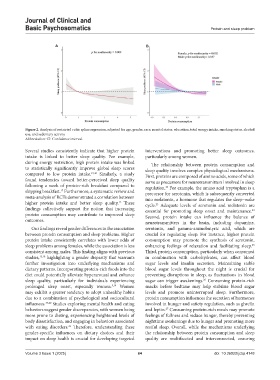
            Figure 2. Analysis of restricted cubic spline regression, adjusted for age, gender, race, marital status, education, total energy intake, smoking status, alcohol
            use, and sedentary activity
            Abbreviation: CI: Confidence interval.

            Several studies consistently indicate that higher protein   interventions  and  promoting  better  sleep  outcomes,
            intake is linked to better sleep quality. For example,   particularly among women.
            during energy restriction, high protein intake was linked   The relationship between protein consumption and
            to statistically significantly improve global sleep scores   sleep quality involves complex physiological mechanisms.
            compared to low protein intake. 15,16  Similarly, a study   First, proteins are composed of amino acids, some of which
            found tendencies toward better-perceived sleep quality   serve as precursors for neurotransmitters involved in sleep
            following a week of protein-rich breakfast compared to   regulation.  For example, the amino acid tryptophan is a
                                                                       22
            skipping breakfast.  Furthermore, a systematic review and   precursor for serotonin, which is subsequently converted
                           17
            meta-analysis of RCTs demonstrated a correlation between   into melatonin, a hormone that regulates the sleep–wake
                                                   12
            higher protein intake and better sleep quality.  These   cycle.  Adequate levels of serotonin and melatonin are
                                                                   23
            findings collectively support the notion that increasing   essential for promoting sleep onset and maintenance.
                                                                                                            24
            protein consumption may contribute to improved sleep   Second, protein intake can influence the balance of
            outcomes.
                                                               neurotransmitters in the brain, including dopamine,
              Our findings reveal gender differences in the association   serotonin, and gamma-aminobutyric acid, which are
            between protein consumption and sleep problems. Higher   crucial for regulating sleep. For instance, higher protein
            protein intake consistently correlates with lower odds of   consumption may promote the synthesis of serotonin,
            sleep problems among females, while the association is less   enhancing  feelings  of  relaxation  and  facilitating  sleep.
                                                                                                            25
            consistent among males. This finding aligns with previous   Third, protein consumption, particularly when consumed
            studies, 13,18  highlighting a gender disparity that warrants   in combination with carbohydrates, can affect blood
            further investigation into underlying mechanisms and   sugar levels and insulin secretion. Maintaining stable
            dietary patterns. Incorporating protein-rich foods into the   blood  sugar  levels  throughout  the  night  is  crucial  for
            diet could potentially alleviate hyperarousal and enhance   preventing disruptions in sleep, as fluctuations in blood
            sleep quality, particularly for individuals experiencing   sugar  can  trigger  awakenings.   Consuming  protein-rich
                                                                                       26
            prolonged sleep onset, especially women.  Women    snacks before bedtime may help stabilize blood sugar
                                                 5,19
            may exhibit a greater tendency to adopt unhealthy habits   levels and promote uninterrupted sleep. Furthermore,
            due to a combination of psychological and sociocultural   protein consumption influences the secretion of hormones
            influences. 17,20  Studies exploring mental health and eating   involved in hunger and satiety regulation, such as ghrelin
            behaviors suggest gender discrepancies, with women being   and leptin.  Consuming protein-rich meals may promote
                                                                       27
            more prone to dieting, experiencing heightened levels of   feelings of fullness and reduce hunger, thereby preventing
            body dissatisfaction, and engaging in behaviors associated   nighttime awakenings due to hunger and promoting more
            with eating disorders.  Therefore, understanding these   restful sleep. Overall, while the mechanisms underlying
                              21
            gender-specific influences on dietary choices and their   the relationship between protein consumption and sleep
            impact on sleep health is crucial for developing targeted   quality are multifaceted and interconnected, ensuring


            Volume 3 Issue 1 (2025)                         64                              doi: 10.36922/jcbp.4148

