


Page 88 - JCBP-3-1
P. 88
Journal of Clinical and
            Basic Psychosomatics                                                     HDL markers and suicidal ideation


            significant dose–response relationships were observed   status, hypertension, diabetes, stroke, and kidney disease
            between other HDL-related inflammatory indicators and   (p  interaction  > 0.05) (Table 3).
            SI (Figure 2).
                                                               4. Discussion
            3.4. Associations between co-exposure to
            inflammatory indicators and SI                     In this cross-sectional study involving 14,554 U.S. adults
                                                               conducted between 2015 and 2023, we examined the
            The WQS regression identified CHR, NEU, and HDL-C as   association between HDL-related inflammatory indicators
            the inflammatory indicators most closely associated with   and SI. Our findings revealed that elevated levels of CHR
            SI. Notably, elevated CHR levels emerged as the primary   were significantly associated with a higher prevalence of
            contributor to the increased prevalence of SI, exerting   SI.  Regulating  blood  CHR  levels  could  potentially  serve
            a  more  pronounced  influence  than  elevated  NEU  levels   as an effective strategy to reduce SI prevalence, thereby
            (Figure A2).
                                                               alleviating the substantial public health burden associated
            3.5. Subgroup analysis                             with suicide.
            Subgroup analyses revealed a consistent positive     Inflammatory responses, immune function, and lipid
            association between CHR and SI across all subgroups,   metabolism are critical mechanisms in the development
            including those defined by age group, gender, race, marital   of many diseases, including SI. 7,27-29  Previous studies have
            status, PIR, education level, alcohol consumption, smoking   highlighted the complex interactions between HDL-C and

            A                               B                                C


            D                               E                               F


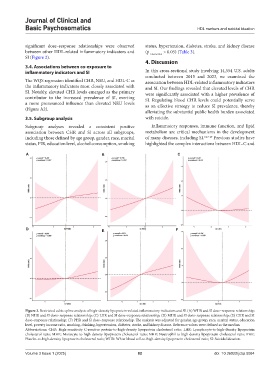
            Figure 2. Restricted cubic spline analysis of high-density lipoprotein-related inflammatory indicators and SI. (A) WHR and SI dose–response relationship;
            (B) NHR and SI dose–response relationship; (C) LHR and SI dose–response relationship; (D) MHR and SI dose–response relationship; (E) CHR and SI
            dose–response relationship; (F) PHR and SI dose–response relationship. The analysis was adjusted for gender, age group, race, marital status, education
            level, poverty income ratio, smoking, drinking, hypertension, diabetes, stroke, and kidney disease. Reference values were defined as the median.
            Abbreviations: CHR: High-sensitivity C-reactive protein-to-high-density lipoprotein cholesterol ratio; LHR: Lymphocyte-to-high-density lipoprotein
            cholesterol ratio; MHR: Monocyte-to-high-density lipoprotein cholesterol ratio; NHR: Neutrophil-to-high-density lipoprotein cholesterol ratio; PHR:
            Platelet-to-high-density lipoprotein cholesterol ratio; WHR: White blood cell-to-high-density lipoprotein cholesterol ratio; SI: Suicidal ideation.


            Volume 3 Issue 1 (2025)                         82                              doi: 10.36922/jcbp.5084

