


Page 20 - JCBP-3-2
P. 20
Journal of Clinical and
            Basic Psychosomatics                                            Alcohol use disorder relapse: Tools and factors


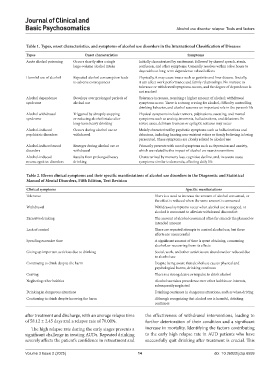
            Table 1. Types, onset characteristics, and symptoms of alcohol use disorders in the International Classification of Diseases
            Types                    Onset characteristics                       Symptoms
            Acute alcohol poisoning  Occurs shortly after a single   Initially characterized by excitement, followed by slurred speech, ataxia,
                                large-volume alcohol intake  confusion, and other symptoms. Generally resolves within a few hours to
                                                            days without long-term dependence-related effects
            Harmful use of alcohol  Repeated alcohol consumption leads   Physically, it may cause issues such as gastritis and liver disease. Socially,
                                to adverse consequences     it can affect work performance and family relationships. No increase in
                                                            tolerance or withdrawal symptoms occurs, and the degree of dependence is
                                                            not reached
            Alcohol dependence   Develops over prolonged periods of   Tolerance increases, requiring a higher amount of alcohol; withdrawal
            syndrome            alcohol use                 symptoms occur. There is a strong craving for alcohol, difficulty controlling
                                                            drinking behavior, and alcohol assumes an important role in the person’s life
            Alcohol withdrawal   Triggered by abruptly stopping   Physical symptoms include tremors, palpitations, sweating, and mental
            syndrome            or reducing alcohol intake after   symptoms such as anxiety, insomnia, hallucinations, and delusions. In
                                long-term heavy drinking    severe cases, delirium tremens or epileptic seizures may occur
            Alcohol-induced     Occurs during alcohol use or   Mainly characterized by psychotic symptoms such as hallucinations and
            psychiatric disorders  withdrawal               delusions, including hearing non-existent voices or firmly believing in being
                                                            persecuted. These symptoms are closely related to alcohol use
            Alcohol-induced mood   Emerges during alcohol use or   Primarily presents with mood symptoms such as depression and anxiety,
            disorders           withdrawal                  which are related to the impact of alcohol on neurotransmitters
            Alcohol-induced     Results from prolonged heavy   Characterized by memory loss, cognitive decline, and, in severe cases,
            neurocognitive disorders  drinking              symptoms similar to dementia, affecting daily life


            Table 2. Eleven clinical symptoms and their specific manifestations of alcohol use disorders in the Diagnostic and Statistical
            Manual of Mental Disorders, Fifth Edition, Text Revision

            Clinical symptoms                                                   Specific manifestations
            Tolerance                                              There is a need to increase the amount of alcohol consumed, or
                                                                   the effect is reduced when the same amount is consumed
            Withdrawal                                             Withdrawal symptoms occur when alcohol use is stopped, or
                                                                   alcohol is consumed to alleviate withdrawal discomfort
            Excessive drinking                                     The amount of alcohol consumed often far exceeds the planned or
                                                                   intended amount
            Lack of control                                        There are repeated attempts to control alcohol use, but these
                                                                   efforts are unsuccessful
            Spending excessive time                                A significant amount of time is spent obtaining, consuming
                                                                   alcohol, or recovering from its effects
            Giving up important activities due to drinking         Social, work, and other activities are abandoned or reduced due
                                                                   to alcohol use
            Continuing to drink despite the harm                   Despite being aware that alcohol use causes physical and
                                                                   psychological harms, drinking continues
            Craving                                                There is a strong desire or impulse to drink alcohol
            Neglecting other hobbies                               Alcohol use takes precedence over other hobbies or interests,
                                                                   subsequently neglected
            Drinking in dangerous situations                       Drinking continues in dangerous situations, such as when driving
            Continuing to drink despite knowing the harm           Although recognizing that alcohol use is harmful, drinking
                                                                   continues

            after treatment and discharge, with an average relapse time   the  effectiveness  of withdrawal interventions,  leading  to
            of 58.12 ± 2.45 days and a relapse rate of 70.00%.  further deterioration of their condition and a significant

              The high relapse rate during the early stages presents a   increase in mortality. Identifying the factors contributing
            significant challenge in treating AUDs. Repeated drinking   to the early high relapse rate in AUD patients who have
            severely affects the patient’s confidence in retreatment and   successfully quit drinking after treatment is crucial. This

            Volume 3 Issue 2 (2025)                         14                              doi: 10.36922/jcbp.6559

