


Page 32 - JCBP-3-3
P. 32
Journal of Clinical and
            Basic Psychosomatics                                                  Microbiota in psychosomatic disorders


            connections to the CNS through sensory and motor   2. The gut microbiota and its role in health
            pathways. 1-4                                      and disease
              The hypothalamic-pituitary-adrenal (HPA) axis, which   The human gut microbiota, a complex  community of
            governs the body’s stress response, is also influenced by   trillions of microorganisms, plays a vital role in digestion,
            gut-derived signals. Stress hormones such as cortisol can   metabolism, immune modulation, and CNS influence.
            impact gut function and alter microbial composition,   A  diverse microbiota is crucial for maintaining health,
            further linking the gut to systemic stress responses.    and its composition is shaped by genetics, diet, age,
                                                         5,6
            Overactivation of the HPA axis leads to excessive cortisol   and environment (Figure  1). A  healthy and diverse gut
            release, gut dysbiosis, and systemic inflammation. This   microbiota  prevents  infections  and  supports  immune
            disruption weakens the gut barrier, allowing inflammatory   defenses. 14,15
            molecules to enter circulation, affecting neurotransmitter
            production and neuroinflammation. These physiological   Gut dysbiosis is characterized by distinct microbial
            changes create a feedback loop where psychological distress   imbalances that vary across different diseases,
            worsens gut health, further amplifying psychosomatic   influencing  host  metabolism,  immunity,  and  overall
            symptoms. 7-9                                      health. 16,17   In inflammatory bowel disease (IBD), there
                                                               is a marked reduction in anti-inflammatory bacteria
              The trillions of microorganisms comprising the  gut   such as  Faecalibacterium prausnitzii,  Roseburia, and
            microbiota produce metabolites, neurotransmitters, and   Akkermansia muciniphila  (Table  1),  accompanied  by
            inflammatory mediators that directly influence brain function   an overgrowth of pro-inflammatory species, such as
            (Figure 1).  In addition, the microbiota also affects critical   Escherichia  coli,  Enterobacteriaceae,  Fusobacterium,
                    10
            processes such as neurogenesis, the integrity of the blood–  and  Ruminococcus gnavus,  leading  to  increased  gut
            brain barrier (BBB), and neural inflammation, underscoring   permeability and chronic immune activation. 18,19
            their impact on mental and emotional health. 11-13  Similarly, in irritable bowel syndrome (IBS), a decline
              Given the increasing prevalence of psychosomatic   in  Bifidobacterium,  Lactobacillus, and  F. prausnitzii is
            disorders and GI dysfunctions, understanding microbial   observed, alongside an increase in  Methanobrevibacter
            contributions to these conditions is essential. This review   smithii, E. coli, Clostridium species, and Proteobacteria,
            analyzes gut microbiota research and its impact on   contributing to visceral hypersensitivity, altered
            psychosomatic conditions, identifying knowledge gaps   motility, and  bloating. 20,21   In obesity and  metabolic
            and discussing recent therapeutic strategies.      syndrome, dysbiosis is marked by an increased
                                                               Firmicutes-to-Bacteroidetes ratio, with elevated levels
                                                               of  Ruminococcus and  Clostridium species that enhance
                                                               calorie absorption, while beneficial  microbes  such as
                                                               A. muciniphila,  Bifidobacterium, and Roseburia are
                                                               diminished, promoting systemic inflammation and
                                                               insulin resistance 22,23  (Table 1). Type 2 diabetes presents
                                                               with a similar loss of butyrate-producing bacteria, such
                                                               as F. prausnitzii and Roseburia, coupled with an increase
                                                               in  E. coli,  Ruminococcus, and  Proteobacteria, which
                                                               contribute to endotoxemia, metabolic dysfunction,
                                                               and chronic inflammation. In colorectal cancer,
                                                               dysbiosis favors tumor-promoting bacteria such as
                                                               Fusobacterium nucleatum, E. coli, Bacteroides fragilis, and
                                                               Peptostreptococcus, which generate pro-inflammatory
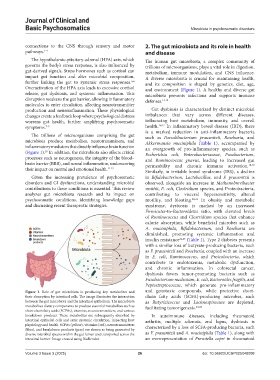
            Figure  1. Role of gut microbiota in producing key metabolites and   and genotoxic compounds, while protective short-
            their absorption by intestinal cells. The image illustrates the interaction   chain fatty acids (SCFA)-producing microbes, such
            between the gut microbiota and the intestinal epithelium. The microbiota   as  Butyricicoccus and  Lachnospiraceae are depleted,
            metabolizes dietary components to produce essential metabolites such as   facilitating tumorigenesis. 24,25
            short-chain fatty acids (SCFAs), vitamins, neurotransmitters, and various
            breakdown products. These metabolites are subsequently absorbed by   In autoimmune diseases, including rheumatoid
            intestinal epithelial cells and enter systemic circulation, impacting host   arthritis, multiple sclerosis, and lupus, dysbiosis is
            physiology and health. SCFAs (yellow), vitamins (red), neurotransmitters   characterized by a loss of SCFA-producing bacteria, such
            (blue), and breakdown products (gray) are shown as being generated by
            diverse microbial species within the gut lumen and transported across the   as F. prausnitzii and A. muciniphila (Table 1), along with
            intestinal barrier. Image created using BioRender.  an overrepresentation of  Prevotella copri in rheumatoid


            Volume 3 Issue 3 (2025)                         26                         doi: 10.36922/JCBP025040008

