


Page 33 - JCBP-3-3
P. 33
Journal of Clinical and
            Basic Psychosomatics                                                  Microbiota in psychosomatic disorders


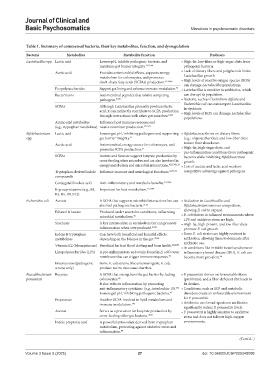
            Table 1. Summary of commensal bacteria, their key metabolites, function, and dysregulation
            Bacteria         Metabolites              Metabolite function                 Dysbiosis
            Lactobacillus spp. Lactic acid  Lowers pH, inhibits pathogenic bacteria, and   •  High‑fat, low‑fiber, or high‑sugar diets favor
                                           maintains gut barrier integrity. 21,22,46  pathogenic bacteria.
                        Acetic acid        Provides antimicrobial effects, supports energy   •  Lack of dietary fibers and polyphenols limits
                                           metabolism for colonocytes, and promotes   Lactobacillus growth.
                                           short-chain fatty acids (SCFAs) production. 21,22,46  •  High levels of reactive oxygen species (ROS)
                                                                               can damage Lactobacillus populations.
                        Exopolysaccharides  Support gut lining and enhance immune modulation. 92  •  Lactobacillus is sensitive to antibiotics, which
                        Bacteriocins       Antimicrobial peptides that inhibit competing   can disrupt its population.
                                           pathogens. 71,72                   •  Bacteria, such as Clostridium difficile and
                                                                               Escherichia coli can outcompete Lactobacillus
                        SCFAs              Although Lactobacillus primarily produces lactic   in dysbiosis.
                                           acid, it can indirectly contribute to SCFA production   •  High levels of ROS can damage Lactobacillus
                                           through interactions with other gut microbes. 10,27
                                                                               populations.
                        Amino acid metabolites    Influence host immune response and
                        (e.g., tryptophan metabolites) neurotransmitter production. 57,71,72
            Bifidobacterium   Lactic acid  Lowers gut pH, inhibiting pathogens and supporting  •  Bifidobacteria thrive on dietary fibers
            spp.                           gut barrier integrity. 27           (e.g., oligosaccharides), and low-fiber diets
                        Acetic acid        Antimicrobial, energy source for colonocytes, and   reduce their abundance.
                                           promotes SCFA production. 27       •  High‑fat, high‑sugar diets, and
                                                                               pro-inflammation conditions favor pathogenic
                        SCFAs              Acetate and formate support butyrate production by   bacteria while inhibiting Bifidobacterium
                                           cross-feeding other microbes and are also involved in   growth.
                                           energy metabolism and microbial interactions. 10,27,92,112  •  Loss of acetate and lactic acid weakens
                        Tryptophan-derived indole  Influence immune and neurological functions. 30,71,72  competitive advantage against pathogens.
                        compounds
                        Conjugated linoleic acid  Anti-inflammatory and metabolic benefits. 21,22,46
                        B-group vitamins (e.g., B1,  Important for host metabolism. 21,22,46
                        B2, B6, B9, B12)
            Escherichia coli  Acetate      A SCFA that supports microbial interactions but can  •  Reduction in Lactobacillus and
                                           also fuel pathogenic bacteria. 21,22  Bifidobacterium removes competition,
                        Ethanol & lactate  Produced under anaerobic conditions, influencing   allowing E. coli to expand.
                                           microbial metabolism. 46           •  E. coli thrives in inflamed environments where
                                                                               LPS and oxidative stress are high.
                        Succinate          A key intermediate in metabolism but can promote   •  High‑fat, high‑protein, and low‑fiber diets
                                           inflammation when overproduced. 21,22  promote E. coli growth.
                        Indole & tryptophan   Can have both beneficial and harmful effects   •  Some E. coli strains are highly resistant to
                        metabolites        depending on the balance in the gut. 49,52  antibiotics, allowing them to dominate after
                                                                               antibiotic use.
                        Vitamin K2 (Menaquinone) Beneficial for host blood clotting and bone health. 21,22,46
                                                                              •  In conditions like irritable bowel syndrome or
                        Lipopolysaccharides (LPS)  A pro-inflammatory endotoxin found in E. coli’s outer   inflammatory bowel disease (IBD), E. coli can
                                           membrane that can trigger immune responses. 90  become more prevalent. 90
                        Enterotoxins (pathogenic   Some E. coli strains, like enterotoxigenic E. coli,
                        strains only)      produce toxins that cause diarrhea.
            Faecalibacterium  Butyrate     A SCFA that strengthens the gut barrier by fueling   •  F. prausnitzii thrives on fermentable fibers
            prausnitzii                    colonocytes. 89                     (prebiotics), and a fiber-deficient diet leads to
                                           It also reduces inflammation by promoting   its decline.
                                           anti-inflammatory cytokines  (e.g., interleukin-10). 141  •  Conditions, such as IBD and metabolic
                                           Lowers gut pH, inhibiting pathogenic bacteria. 10  disorders create an unfavorable environment
                        Propionate         Another SCFA involved in lipid metabolism and   for F. prausnitzii.
                                           immune modulation. 130             •  Antibiotic use: broad‑spectrum antibiotics
                                                                               significantly reduce F. prausnitzii levels.
                        Acetate            Serves as a precursor for butyrate production by   •  F. prausnitzii is highly sensitive to oxidative
                                           cross-feeding other gut bacteria. 10,89  stress and does not tolerate high-oxygen
                        Indole propionic acid   A powerful antioxidant derived from tryptophan   environments.
                                           metabolism, protecting against oxidative stress and
                                           inflammation. 89
                                                                                                       (Cont'd...)


            Volume 3 Issue 3 (2025)                         27                         doi: 10.36922/JCBP025040008

