


Page 77 - JCBP-3-3
P. 77
Journal of Clinical and
            Basic Psychosomatics                                                Emotional effects of COVID-19 memories


                                                                 The present study found that memories of panic buying
                                                               were associated with elevated levels of EDA and were rated
                                                               as the second highest stressor associated with anxiety by the
                                                               participants. This may be because individuals, particularly
                                                               those from Westernized societies, may not have previously
                                                               encountered situations in which they were forced to deal
                                                               with shortages of food and empty store shelves. This
                                                               lack of prior experience may contribute to the anxiety
                                                               associated with this COVID-19 stressor. Our results also
                                                               resonate well with research connecting shortages in the
                                                               supermarkets, during the pandemic, to poorer mental
                                                                                     35
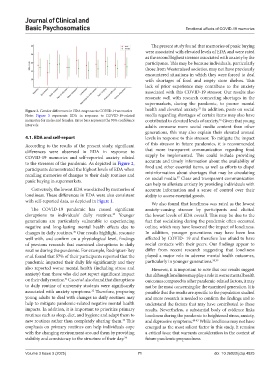
            Figure 3. Gender differences in EDA response to COVID-19 memories  health and elevated anxiety.  In addition, posts on social
            Note:  Figure  3 represents EDA in response to COVID-19-related   media regarding shortages of certain items may also have
            memories for males and females. Error bars represent the 95% confidence   contributed to elevated levels of anxiety.  Given that young
                                                                                              36
            intervals.                                         adults  consume  more  social  media  content  than  other
                                                               generations, this may also explain their elevated arousal
            4.1. EDA and self-report                           levels in response to this stressor. To mitigate the impact
            According to the results of the present study, significant   of this stressor in future pandemics, it is recommended
            differences were observed in EDA in response to    that more transparent communication regarding food
            COVID-19 memories and self-reported anxiety related   supply be implemented. This could include providing
            to the stressors of the pandemic. As depicted in Figure 2,   accurate and timely information about the availability of
            participants demonstrated the highest levels of EDA when   food and other essential items, as well as efforts to dispel
            recalling memories of changes to their daily routines and   misinformation about shortages that may be circulating
                                                                            37
            panic buying in supermarkets.                      on social media.  Clear and transparent communication
                                                               can help to alleviate anxiety by providing individuals with
              Conversely, the lowest EDA was elicited by memories of   accurate information and a sense of control over their
            loneliness. These differences in EDA were also consistent   ability to access essential goods.
            with self-reported data, as depicted in Figure 1.
                                                                 We also found that loneliness was rated as the lowest
              The COVID-19 pandemic has caused significant     anxiety-causing  stressor  by  participants  and  elicited
            disruptions to individuals’ daily routines.  Younger   the lowest levels of EDA overall. This may be due to the
                                                 29
            generations are particularly vulnerable to experiencing   fact that socializing during the pandemic often occurred
            negative and long-lasting mental health effects due to   online, which may have lessened the impact of loneliness.
            changes in daily routines.  Our results highlight, resonate   In addition, younger generations may have been less
                                30
            well with, and confirm on a physiological level, findings   affected by COVID- 19 and therefore less afraid to have
            of previous research that examined disruptions to daily   social contacts with their peers. Our findings appear to
            routine during the pandemic. For example, Rodríguez-Rey   differ from recent research suggesting that loneliness
            et al. found that 57% of their participants reported that the   played a major role in adverse mental health outcomes,
            pandemic impacted their daily life significantly and they   particularly in younger generations. 38,39
            also reported worse mental health (including stress and   However, it is important to note that our results suggest
            anxiety) than those who did not report significant impact   that although loneliness may play a role in worse mental health
            on their daily routine.  Cao et al. also found that disruptions   outcomes compared to other pandemic-related factors, it may
                             31
            to  daily  routine  of  university  students  were  significantly   not be the most concerning for the examined generation. It is
            associated with anxiety symptoms.  Therefore, preparing   possible that the results are specific to the population studied
                                        32
            young adults to deal with changes in daily routines may   and more research is needed to confirm the findings and to
            help to mitigate pandemic-related negative mental health   understand the factors that may have contributed to these
            impacts. In addition, it is important to prioritize primary   results.  Nevertheless,  a  substantial  body  of  evidence  links
            routines such as sleep, diet, and hygiene and adapt them to   loneliness during the pandemic to heightened stress, anxiety,
            new routines rather than completely altering them.  This   and depressive symptoms. 40-43  While loneliness may not have
                                                     33
            emphasis on primary routines can help individuals cope   emerged as the most salient factor in this study, it remains
            with the changing environment around them by providing   a critical issue that warrants consideration in the context of
            stability and consistency to the structure of their day. 34  future pandemic preparedness.


            Volume 3 Issue 3 (2025)                         71                              doi: 10.36922/jcbp.4825

