


Page 90 - JCBP-3-3
P. 90
Journal of Clinical and
            Basic Psychosomatics                                                            Impact of seizures on life


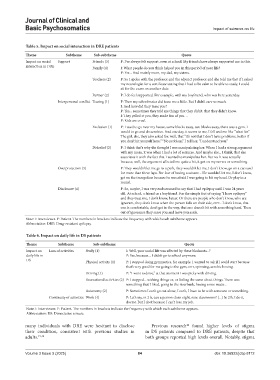
            Table 5. Impact on social interaction in DRE patients
            Theme            Subtheme    Sub‑subtheme                         Quote
            Impact on social   Support  Friends (3)  P: I’ve always felt support, even at school. My friends have always supported me in this.
            interaction in DRE          Family (4)  I: What people do you think helped you in this period of your life?
                                                    P: Err... And mainly mom, my dad, my sisters.
                                        Teachers (2)  P: So I spoke with the professor and the adjunct professor and she told me that if I asked
                                                    my neurologist for a certificate stating that I had to be calm to be able to study, I could
                                                    sit for the exam on another date.
                                        Partner (2)  P: I do feel supported. For example, with my boyfriend, who was here yesterday.
                          Interpersonal conflict Teasing (1)  P: Then my schoolmates did tease me a little. But I didn’t care so much.
                                                    I: And how did they tease you?
                                                    P: Yes... sometimes they told me things that they didn’t. that they didn’t know.
                                                    I: They yelled at you, they made fun of you…
                                                    P: Kids are cruel.
                                        Exclusion (1)  P: I used to go near my house, some blocks away, two blocks away, there was a gym. I
                                                    would to go and do aerobics. And one day, it seems to me, I fell and me like “what for.”
                                                    The girl, she, they also asked for. well, that “it’s not that I don’t have problems, better if
                                                    you don’t hit yourself here.” “No problem,” I tell her, “I understand you.”
                                        Disbelief (2)  P: I think that’s why she thought I was manipulating her. When I had a strong argument
                                                    with my mom, it was when I had a lot of seizures. And maybe she... I think, that she
                                                    associates it with the fact that I wanted to manipulate her. But no. It was actually
                                                    because, well, the argument affected me quite a bit, it got on my nerves or something.
                          Overprotection (5)        P: They wouldn’t let me go to a park, they wouldn’t let me, I don’t know, go on a carousel
                                                    for more than three laps. For fear of having a seizure... He wouldn’t let me, I don’t know,
                                                    get on the trampoline because he was afraid I was going to hit my head. Or play in a
                                                    round.
                          Disclosure (4)            P: So, maybe, I was very embarrassed to say that I had epilepsy until I was 24 years
                                                    old. At school, a friend or a boyfriend. For the simple fact of saying “I have epilepsy”
                                                    and they treat me, I don’t know, better. Or there are people who don’t know, who are
                                                    ignorant, they don’t know when the person falls on their side, errr... I don’t know, that
                                                    one is comfortable, don’t get in the way, that one doesn’t hit with something hard. Then
                                                    out of ignorance they scare you and leave you aside.
            Note: I: Interviewer. P: Patient. The numbers in brackets indicate the frequency with which each subtheme appears.
            Abbreviation: DRE: Drug-resistant epilepsy.

            Table 6. Impact on daily life in DS patients
            Theme         Subtheme       Sub‑subtheme                          Quote
            Impact on   Loss of activities  Study (1)  I: Well, your social life was affected by these blackouts...?
            daily life in                              P: Yes, because... I didn’t go to school anymore.
            DS                       Physical activity (1)  P: I stopped doing gymnastics, for example. I wanted to ask if I could start because
                                                       that’s very good for me going to the gym, errr, spinning, aerobic boxing.
                                     Driving (1)       P: “I want to drive,” at that moment I was picky with driving.
                                     Recreational activities (2) P: I stopped... wishing things or, or feeling the same about things. There was
                                                       something that I liked, going to the riverbank, having some mates...
                                     Autonomy (2)      P: Sometimes I can’t go out alone, I can’t, I have to be with someone or something.
                      Continuity of activities Work (4)  P: Let’s say, in 2 h, can a person clean eight, nine classrooms? (...) In 2 h, I do it,
                                                       doctor. But I do it because I can’t lose my job.
            Note: I: Interviewer. P: Patient. The numbers in brackets indicate the frequency with which each subtheme appears.
            Abbreviation: DS: Dissociative seizure.

            many individuals  with DRE were hesitant to disclose   Previous research  found higher  levels of stigma
                                                                                44
            their condition, consistent with previous studies in   in DS patients compared to DRE patients, despite that
            adults. 19,43                                      both groups reported high levels overall. Notably, stigma


            Volume 3 Issue 3 (2025)                         84                              doi: 10.36922/jcbp.8112

