


Page 31 - JCTR-10-1
P. 31
Shah et al. | Journal of Clinical and Translational Research 2024; 10(1): 25-32   27
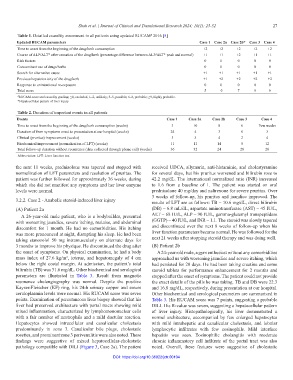
        Table 1. Detailed causality assessment in all patients using updated RUCAM  2016 [5]
                                                                #
        Updated RUCAM parameters                                                    Case 1  Case 2a  Case 2b*  Case 3  Case 4
        Time to onset from the beginning of the drug/herb consumption                 +2    +2      +2     +2    +2
        Course of ALP/ALT* after cessation of the drug/herb (percentage difference between ALP/ALT* peak and normal)  +1  +1  +2  +1  +1
        Risk factors                                                                  0      0      0      0     0
        Concomitant use of drugs/herbs                                                0      0      0      0     0
        Search for alternative cause                                                  +1    +1      +1     +1    +1
        Previous hepatotoxicity of the drug/herb                                      +1    +2      +2     +2    +2
        Response to unintentional re-exposure                                         0      0      0      0     0
        Total score                                                                   5       6     7      6     6
        # RUCAM score and causality grading: ≤0, excluded; 1–2, unlikely; 3–5, possible; 6–8, probable; ≥9, highly probable.
        *Hepatocellular pattern of liver injury
        Table 2. Duration of important events in all patients
        Events                                                         Case 1   Case 2a   Case 2b   Case 3    Case 4
        Time to onset from the beginning of the drug/herb consumption (weeks)  3   10       8         6      Few weeks
        Duration of from symptoms onset to presentation at our hospital (weeks)  24  4      3         6         3
        Clinical (pruritus) improvement (weeks)                          3        3         4         2         4
        Biochemical improvement (normalization of LFT) (weeks)          11        11        14        8         12
        Total follow-up duration without recurrence (data collected through phone call) (weeks)  36  32  24  28  28
        Abbreviation: LFT: Liver function test.

        the next 11 weeks, prednisolone was tapered and stopped with   received UDCA, silymarin, anti-histaminic, and cholestyramine
        normalization of LFT parameters and resolution of pruritus. The   for several days, but his pruritus worsened and bilirubin rose to
        patient was further followed for approximately 36 weeks, during   42.2 mg/dL. The international normalized ratio (INR) increased
        which she did not manifest any symptoms and her liver enzyme   to  1.6  from  a  baseline  of  1.  The  patient  was  started  on  oral
        levels were normal.                                     prednisolone 40 mg/day and naltrexone for severe pruritus. Over
                                                                3 weeks of follow-up, his pruritus and jaundice improved. The
        3.2.2. Case 2 - Anabolic steroid-induced liver injury   results of LFT are as follows: TB – 10.6 mg/dL, direct bilirubin

        (A) Patient 2a                                          (DB) – 6.8 mL/dL, aspartate aminotransferase (AST) – 45 IU/L,
          A 26-year-old male patient, who is a bodybuilder, presented   ALT – 68 IU/L, ALP – 90 IU/L, gamma-glutamyl transpeptidase
        with worsening jaundice, severe itching, malaise, and abdominal   (GGTP) – 40 IU/L, and INR – 1.1. The steroid was slowly tapered
        discomfort  for  1  month.  He  had  no  comorbidities.  His  itching   and discontinued over the next 8 weeks of follow-up when his
        was more pronounced at night, disrupting his sleep. He had been   liver function parameters became normal. He was followed for the
        taking  stanozolol  50  mg  intramuscularly  on  alternate  days  for   next 21 weeks after stopping steroid therapy and was doing well.
        3 months to improve his physique. He discontinued the drug after   (B) Patient 2b
        the onset of symptoms. On physical examination, he had a body   A 24-year-old male, a gym enthusiast without any comorbidities
        mass  index  of  27.6  kg/m ,  icterus, and  hepatomegaly  of  4  cm   approached us with worsening jaundice and severe itching, which
                             2
        below the right costal margin. At admission, the patient’s total   had persisted for 20 days. He had been taking creatine and some
        bilirubin (TB) was 31.6 mg/dL. Other biochemical and serological   steroid  tablets  for  performance  enhancement  for  2  months  and
        parameters  are illustrated  in  Table  3. Result from magnetic   stopped after the onset of symptoms. The patient could not provide
        resonance  cholangiography was normal.  Despite the positive   the exact details of the pills he was taking. TB and DB were 22.3
        Kayser-Fleischer (KF) ring, his 24-h urinary copper and serum   and 16.8 mg/dL, respectively, during presentation at our hospital.
        ceruloplasmin levels were normal. His RUCAM score was seven   Other biochemical and serological parameters are summarized in
        points. Examination of percutaneous liver biopsy showed that his   Table 3. His RUCAM score was 7 points, suggesting a probable
        liver had preserved architecture with portal tracts showing mild   DILI. His R-value was seven, suggesting a hepatocellular pattern
        mixed inflammation, characterized by lymphomononuclear cells   of liver injury. Histopathologically, his liver  demonstrated  a
        with a fair number of neutrophils and a mild ductular reaction.   normal architecture,  accompanied  by few enlarged hepatocytes
        Hepatocytes  showed intracellular  and canalicular  cholestasis   with mild intrahepatic  and canalicular  cholestasis, and lobular
        predominantly  in  zone  3.  Canalicular  bile  plugs,  cholestatic   lymphocytic  infiltrates  with  few  eosinophils.  Mild  interface
        rosettes, and prominent zone 3 perivenulitis were also noted. These   hepatitis  was  seen.  Eosinophilic  cholangitis  with  moderate
        findings  were  suggestive  of  mixed  hepatocellular-cholestatic   chronic  inflammatory  cell  infiltrate  of  the  portal  tract  was  also
        pathology compatible with DILI (Figure 3, Case 2a). The patient   noted.  Overall,  these  features  were  suggestive  of cholestatic
                                                DOI: https://doi.org/10.36922/jctr.00104

