


Page 41 - JCTR-10-1
P. 41
Gonda et al. | Journal of Clinical and Translational Research 2024; 10(1): 33-51   37


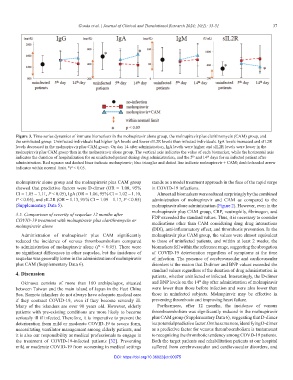
        Figure 3. Time-series dynamics of immune biomarkers in the molnupiravir alone group, the molnupiravir plus clarithromycin (CAM) group, and
        the uninfected group. Uninfected individuals had higher IgA levels and lower sIL2R levels than infected individuals. IgA levels increased and sIL2R
        levels decreased in the molnupiravir plus CAM group. On day 14 after administration, IgA levels were higher and sIL2R levels were lower in the
        molnupiravir plus CAM group than in the molnupiravir alone group. The vertical axis indicates the value of each biomarker, while the horizontal axis
        indicates the duration of hospitalization for an uninfected patient during drug administration, and the 5  and 14  days for an infected patient after
                                                                                 th
                                                                                        th
        administration. Red squares and dashed lines indicate molnupiravir; blue triangles and dotted line indicate molnupiravir + CAM; double-headed arrow
        indicates within normal limit. *P < 0.05.

        molnupiravir alone group and the molnupiravir plus CAM group   stands as a model treatment approach in the face of the rapid surge
        showed that predictive factors were D-dimer (OR = 1.08, 95%   in COVID-19 infections.
        CI = 1.05 – 1.11, P < 0.05), IgA (OR = 1.06, 95% CI = 1.02 – 1.10,   Almost all biomarkers were reduced surprisingly by the combined
        P < 0.05), and sIL2R (OR = 1.13, 95% CI = 1.09 – 1.17, P < 0.05)   administration of molnupiravir and CAM as compared to the
        (Supplementary Data 5).                                 molnupiravir alone administration (Figure 2). However, even in the
                                                                molnupiravir plus CAM group, CRP, neutrophils, fibrinogen, and
        3.5. Comparison of severity of sequelae 12 months after   FDP exceeded the standard values. Thus, it is necessary to consider
        COVID-19 treatment with molnupiravir plus clarithromycin or
        molnupiravir alone                                      medications other than CAM considering drug–drug interactions
                                                                (DDI), anti-inflammatory effect, and thrombosis prevention. In the
          Administration  of  molnupiravir  plus  CAM  significantly   molnupiravir plus CAM group, the values were almost equivalent
        reduced  the  incidence  of  venous  thromboembolism  compared   to  those  of  uninfected  patients,  and  within  at  least  2 weeks,  the
        to administration of molnupiravir alone (P < 0.05). There were   biomarkers fell within the reference range, suggesting the abrogation
        no significant differences in other sequelae, but the incidence of   of COVID-19 deterioration regardless of symptoms at the time
        sequelae was generally lower in the administration of molnupiravir   of infection. The presence of cerebrovascular and cardiovascular
        plus CAM (Supplementary Data 6).                        disorders is the reason that D-dimer and BNP values exceeded the
                                                                standard values regardless of the duration of drug administration in
        4. Discussion                                           patients, whether uninfected or infected. Interestingly, the D-dimer
                                                                                    th
          Okinawa  consists  of  more  than  160  archipelagos,  situated   and BNP levels on the 14  day after administration of molnupiravir
        between Taiwan and the main island of Japan in the East China   were lower than those before infection and were also lower than
        Sea. Remote islanders do not always have adequate medical care   those  in  uninfected  subjects.  Molnupiravir  may  be  effective  in
        if  they  contract  COVID-19,  even  if  they  become  severely  ill.   preventing thrombosis and improving heart failure.
        Many of the islanders are over 90 years old. However, elderly   Furthermore,  after  12  months,  the  incidence  of  venous
        patients with pre-existing conditions are more likely to become   thromboembolism was significantly reduced in the molnupiravir
        seriously ill if infected. Therefore, it is imperative to prevent the   plus CAM group (Supplementary Data 6), suggesting that D-dimer
        deterioration from mild or moderate COVID-19 to severe form,   is a potential predictive factor. On the same note, identifying D-dimer
        necessitating ventilator management among elderly patients, and   as a predictive factor for venous thromboembolism is tantamount
        it is also our responsibility as medical professionals to engage in   to recognizing the thrombotic tendency among COVD-19 patients.
        the treatment  of COVID-19-infected patients  [32]. Preventing   Both the target patients and rehabilitation patients at our hospital
        mild or moderate COVID-19 from worsening in medical settings   suffered from cerebrovascular and cardiovascular disorders, and
                                                  DOI: https://doi.org/10.36922/jctr.00075

