


Page 18 - JCTR-10-4
P. 18
240                       de Almeida et al. | Journal of Clinical and Translational Research 2024; 10(4): 237-245


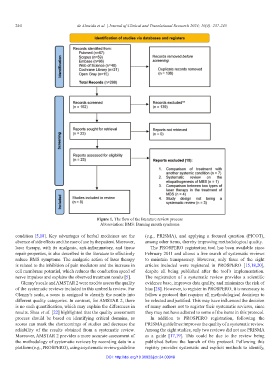
                                          Figure 1. The flow of the literature review process
                                            Abbreviation: BMS: Burning mouth syndrome

        condition  [5,18].  Key  advantages  of  herbal  medicines  are  the   (e.g.,  PRISMA),  and  applying  a  focused  question  (PICOT),
        absence of side effects and the ease of use by the patient. Moreover,   among other items, thereby improving methodological quality.
        laser  therapy,  with  its  analgesic,  anti-inflammatory,  and  tissue   The PROSPERO registration tool has been available since
        repair properties, is also described in the literature to effectively   February 2011 and allows a free search of systematic reviews
        reduce  BMS  symptoms. The  analgesic  action  of  laser  therapy   to  maintain  transparency.  However,  only  three  of  the  eight
        is related to the inhibition of pain mediators and the increase in   articles  included  were  registered  in  PROSPERO  [15,18,20],
        cell membrane potential, which reduces the conduction speed of   despite  all  being  published  after  the  tool’s  implementation.
        nerve impulses and explains the observed treatment results [5].  The  registration  of  a  systematic  review  provides  a  scientific
          Glenny’s scale and AMSTAR 2 were used to assess the quality   evidence base, improves data quality, and minimizes the risk of
        of the systematic reviews included in this umbrella review. For   bias [28]. However, to register in PROSPERO, it is necessary to
        Glenny’s scale, a score is assigned to classify the results into   follow a protocol that requires all methodological decisions to
        different quality categories. In contrast, for AMSTAR 2, there   be selected and justified. This may have influenced the decision
        is no such quantification, which may explain the differences in   of many authors not to register their systematic reviews, since
        results. Shea et al. [22] highlighted that the quality assessment   they may not have adhered to some of the items in this protocol.
        process  should  be  based  on  identifying  critical  domains,  as   In  addition  to  PROSPERO  registration,  following  the
        scores can mask the shortcomings of studies and decrease the   PRISMA guidelines improves the quality of a systematic review.
        reliability  of the  results  obtained  from  a  systematic  review.   Among the eight studies, only two reviews did not use PRISMA
        Moreover, AMSTAR 2 provides a more accurate assessment of   as a guide  [17,19].  This  could be  due  to  the  review  being
        the methodology of systematic reviews by recording data in a   published  before  the  launch  of  this  protocol.  Following  this
        platform (e.g., PROSPERO), using a systematic review guideline   registry provides systematic and explicit methods to identify,

                                               DOI: http://doi.org/10.36922/jctr.24.00018

