


Page 28 - JCTR-10-4
P. 28
250                       Sari et al. | Journal of Clinical and Translational Research 2024; 10(4): 246-255
                                                               95% CI: 1.09 – 28.66; P = 0.048), Vitamin D (mean difference:
                                                               26.69 fg/µL; 95% CI: 11.82 – 41.57; P = 0.001), and combination
                                                               therapy (mean difference: 43.43 fg/µL; 95% CI: 28.03 – 58.83;
                                                               P < 0.001) compared to the untreated diabetic group (Figure 7).
                                                               The HF/HG/STZ+VitD group tended to express lower levels
                                                               of TGF-β  mRNA  compared  to  the  HF/HG/STZ+EMPA
                                                               group,  though  not  statistically  significant  (mean  difference:
                                                               12.91 fg/µL; 95% CI: −1.96 – 27.79; P = 0.086). Compared
                                                               to  monotherapy,  combination  therapy  displayed  the  greatest

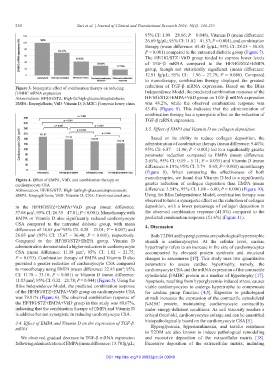
        Figure 3. Synergistic effect of combination therapy on reducing   reduction  of TGF-β  mRNA  expression.  Based  on  the  Bliss
        β-MHC mRNA expression                                  Independence Model, the predicted combination response of the
        Abbreviations: HF/HG/STZ: High-fat/high-glucose/streptozotocin;   HF/HG/STZ+EMPA+VitD group on TGF-β mRNA expression
        EMPA: Empagliflozin; VitD: Vitamin D; β-MHC: β-myosin heavy chain  was  48.2%,  while  the  observed  combination  response  was
                                                               43.4%  (Figure  8).  This  indicates  that  the  administration  of
                                                               combination therapy has a synergistic effect on the reduction of
                                                               TGF-β mRNA expression.
                                                               3.5. Effect of EMPA and Vitamin D on collagen deposition

                                                                 Based  on  its  ability  to  reduce  collagen  deposition,  the
                                                               administration of combination therapy (mean difference: 9.41%;
                                                               95% CI: 6.87 – 11.96; P < 0.001) led to a significantly greater
                                                               parameter  reduction  compared  to  EMPA  (mean  difference:
                                                               2.65%; 95% CI: 0.19 – 5.11; P = 0.035) and Vitamin D (mean
                                                               difference: 6.19%; 95% CI: 3.74 – 8.65; P < 0.001) monotherapy
                                                               (Figure  9).  When  comparing  the  effectiveness  of  both
        Figure 4. Effect of EMPA, VitD, and combination therapy on   monotherapies, we found that Vitamin D led to a significantly
        cardiomyocyte CSA                                      greater  reduction  of  collagen  deposition  than  EMPA  (mean
        Abbreviation: HF/HG/STZ: High-fat/high-glucose/streptozotocin;   difference: 3.54%; 95% CI: 1.08 – 6.00; P = 0.006) (Figure 10).
        EMPA: Empagliflozin; VitD: Vitamin D; CSA: Cross-sectional area  Using the Bliss Independence Model, combination therapy was
                                                               observed to have a synergistic effect on the reduction of collagen
        in  the  HF/HG/STZ+EMPA+VitD  group  (mean  difference:   deposition, with a lower percentage of collagen deposition in
        37.08 µm ; 95% CI: 26.35 – 47.81; P < 0.001). Monotherapy with   the  observed  combination  response  (41.8%)  compared  to  the
               2
        EMPA  or Vitamin  D  also  significantly  reduced  cardiomyocyte   predicted combination response (51.6%) (Figure 11).
        CSA  compared  to  the  untreated  diabetic  group,  with  mean   4. Discussion
        differences of 14.65 µm 95% CI: 4.28 – 25.01; P = 0.007) and
                           2 (
        26.03  µm   (95%  CI:  15.67  –  36.40;  P  <  0.001),  respectively.   Both T2DM and hyperglycemia are pathological hypertrophic
                2
        Compared  to  the  HF/HG/STZ+EMPA  group,  Vitamin  D   stimuli  in  cardiomyocytes.  At  the  cellular  level,  cardiac
        administration demonstrated a higher reduction in cardiomyocyte   hypertrophy refers to an increase in the size of cardiomyocytes
        CSA  (mean  difference:  11.38  µm ;  95%  CI:  1.02  –  21.75;   accompanied  by elevated  protein synthesis and structural
                                    2
        P = 0.033). Combination therapy of EMPA and Vitamin D also   changes in sarcomeres [17]. This study uses two quantitative
        provided a greater reduction of cardiomyocyte CSA compared   parameters  to  assess  cardiac  hypertrophy,  namely,  the
        to monotherapy using EMPA (mean difference: 22.43 µm ; 95%   cardiomyocyte CSA and the mRNA expression of the contractile
                                                     2
        CI: 11.70 – 33.16; P < 0.001) or Vitamin D (mean difference:   cytoskeletal β-MHC protein as a marker of hypertrophy [17].
        11.05 µm ; 95% CI: 0.32 – 21.78; P = 0.044) (Figure 5). Using the   Apoptosis, resulting from hyperglycemia-induced stress, causes
               2
        Bliss Independence Model, the predicted combination response   viable cardiomyocytes to undergo hypertrophy to compensate
        of the HF/HG/STZ+EMPA+VitD group on cardiomyocyte CSA   for cardiac  pump function  [4,5].  Exposure  to  pathological
        was 79.81% (Figure 6). The observed combination response of   stimuli increases the expression of the contractile cytoskeletal
        the HF/HG/STZ+EMPA+VitD group in this study was 80.67%,   β-MHC  protein,  maintaining  cardiomyocyte  contractility
        indicating that the combination therapy of EMPA and Vitamin D   under energy-deficient conditions. As cell viscosity reaches a
        is additive but not synergistic in reducing cardiomyocyte CSA.  critical threshold, cardiomyocytes enlarge and can be quantified
        3.4. Effect of EMPA and Vitamin D on the expression of TGF-β   histopathologically based on the cardiomyocyte CSA [5].
        mRNA                                                     Hyperglycemia,  hyperinsulinemia,  and  insulin  resistance
                                                               in  T2DM are  also  known to  induce  pathological  remodeling
          We observed gradual decrease in TGF-β mRNA expression   and excessive  deposition  of the  extracellular  matrix  [18].
        following administration of EMPA (mean difference: 13.78 fg/µL;   Excessive  deposition  of  the  extracellular  matrix,  including


                                               DOI: http://doi.org/10.36922/jctr.24.00010

