


Page 30 - JCTR-10-4
P. 30
252                       Sari et al. | Journal of Clinical and Translational Research 2024; 10(4): 246-255

                                      A                        B


                          C                       D                        E


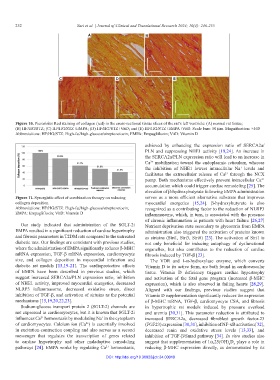
        Figure 10. Picrosirius Red staining of collagen (red) in the cross-sectional tissue slices of the rat’s left ventricle: (A) normal rat tissue;
        (B) HF/HG/STZ; (C) HF/HG/STZ+EMPA; (D) HF/HG/STZ+VitD; and (E) HF/HG/STZ+EMPA+VitD. Scale bars: 50 µm. Magnification: ×400
        Abbreviations: HF/HG/STZ: High-fat/high-glucose/streptozotocin; EMPA: Empagliflozin; VitD: Vitamin D

                                                               achieved  by  enhancing  the  expression  ratio  of  SERCA2a/
                                                               PLN  and  suppressing  NHE1  activity  [19,24]. An increase  in
                                                               the SERCA2a/PLN expression ratio will lead to an increase in
                                                               Ca  mobilization toward the endoplasmic reticulum, whereas
                                                                 2+
                                                               the  inhibition  of  NHE1  lowers  intracellular  Na  levels and
                                                                                                       +
                                                               facilitates  the  extracellular  release  of  Ca   through  the  NCX
                                                                                                 2+
                                                               pump. Both mechanisms effectively prevent intracellular Ca
                                                                                                                2+
                                                               accumulation which could trigger cardiac remodeling [25]. The
                                                               elevation of β-hydroxybutyrate following EMPA administration
        Figure 11. Synergistic effect of combination therapy on reducing   serves  as  a  more  efficient  alternative  substrate  that  improves
        collagen deposition                                    myocardial  energetics  [15,24].  β-hydroxybutyrate  is also
        Abbreviations: HF/HG/STZ: High-fat/high-glucose/streptozotocin;   recognized as a contributing factor to the reduction of NLRP3
        EMPA: Empagliflozin; VitD: Vitamin D                   inflammasome, which, in turn, is associated with the presence
                                                               of chronic inflammation in patients with heart failure [26,27]
          Our  study  indicated  that  administration  of  the  SGLT-2i   Nutrient deprivation state secondary to glycosuria from EMPA
        EMPA resulted in a significant reduction of cardiac hypertrophy   administration also triggered the activation of proteins known
        and fibrosis parameters in T2DM rats compared to the untreated   as sirtuins (Sirt1, Sirt3, Sirt6) [23]. The activation of Sirt1 is
        diabetic rats. Our findings are consistent with previous studies,   not  only  beneficial  for  inducing  autophagy  of  dysfunctional
        where the administration of EMPA significantly reduces β-MHC   organelles,  but  also  contributes  to  the  reduction  of  cardiac
        mRNA expression, TGF-β mRNA expression, cardiomyocyte   fibrosis induced by TGF-β [23].
        size,  and  collagen  deposition  in  myocardial  infarction  and   The  VDR  and  1-α-hydroxylase  enzyme,  which  converts
        diabetic  rat  models  [15,19-21].  The  cardioprotective  effects   Vitamin D to its active form, are both found in cardiovascular
        of  EMPA  have  been  described  in  previous  studies,  which   tissue.  Vitamin  D  deficiency  triggers  cardiac  hypertrophy
        suggest  increased  SERCA2a/PLN  expression  ratio,  inhibition   and activation  of the fetal gene program (increased  β-MHC
        of NHE1 activity, improved myocardial energetics, decreased   expression),  which  is  also  observed  in  failing  hearts  [28,29].
        NLRP3  inflammasome,  decreased  oxidative  stress,  direct   Aligned  with  our  findings,  previous  studies  suggest  that
        inhibition of TGF-β, and activation of sirtuins as the potential   Vitamin D supplementation significantly reduces the expression
        mechanisms [15,19,20,22,23].                           of β-MHC mRNA, TGF-β, cardiomyocyte CSA, and fibrosis
          Sodium-glucose transport protein 2 (SGLT-2) channels are   in hypertrophic rat models induced by pressure overload
        not expressed in cardiomyocytes, but it is known that SGLT-2i   and uremia [30,31]. This parameter reduction is attributed to
        influences Ca  homeostasis by modulating Na  in the cytoplasm   increased  SERCA2a,  decreased  fibroblast  growth  factor-23
                                            +
                  2+
        of cardiomyocytes. Calcium ion (Ca ) is essentially involved   (FGF23) expression [30,31], inhibition of NF-κB activation [32],
                                      2+
        in excitation-contraction coupling and also serves as a second   decreased  renin and oxidative stress levels  [13,33],  and
        messenger that regulates the transcription  of genes related   inhibition of TGF-β/Smad pathway [34]. In vitro studies also
        to cardiac  hypertrophy  and other  maladaptive  remodeling   suggest that supplementation of 1α,25(OH) D  plays a role in
                                                                                                    3
                                                                                                  2
        pathways [24]. EMPA works by regulating Ca  homeostasis,   reducing  β-MHC  expression  directly,  as  demonstrated  by  its
                                              2+
                                               DOI: http://doi.org/10.36922/jctr.24.00010

