


Page 38 - JCTR-10-5
P. 38
300                       Marshall et al. | Journal of Clinical and Translational Research 2024; 10(5): 296-306
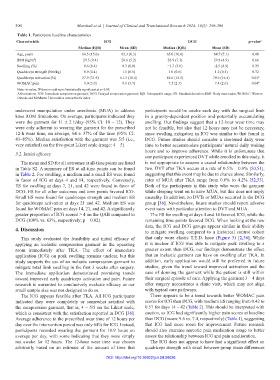
        Table 1. Participant baseline characteristics
        Characteristic                       ICG                                 DCG                       p‑value a
                                  Median (IQR)      Mean (SD)         Median (IQR)         Mean (SD)
        Age, years                  64.5 (15.0)      62.3 (8.3)         65.0 (10.0)         64.7 (7.1)      0.40
        BMI (kg/m )                 29.5 (9.4)       28.6 (5.2)         28.9 (7.3)          29.8 (4.9)      0.66
               2
        Swelling (%)                 0.6 (8.4)       0.3 (8.0)          −1.7 (5.0)          -2.5 (4.9)      0.35
        Quadriceps strength (Nm/kg)  0.9 (0.4)       1.1 (0.5)           1.0 (0.6)          1.2 (0.5)       0.72
        Quadriceps activation (%)   57.9 (31.9)     61.3 (18.4)         84.6 (14.5)         79.6 (16.4)     0.01 b
        WOMAC pain                   9.0 (5.0)       9.6 (3.7)           7.5 (2.5)          7.4 (2.6)       0.04 b
        Note:  p-value, Wilcoxon rank sum;  statistically significant at p<0.05.
            a
                             b
        Abbreviations: ICG: Immediate compression garment; DCG: Delayed compression garment; IQR: Interquartile range; SD: Standard deviation; BMI: Body mass index; WOMAC: Western
        Ontario and McMaster Universities osteoarthritis index.
        underwent manipulation  under anesthesia  (MUA) to address   participants would be awake each day with the surgical limb
        knee ROM limitations. On average, participants indicated they   in a gravity-dependent  position and potentially  accumulating
        wore the garment for 11 ± 2 h/day (95% CI: 10 – 12). They   swelling. Our findings suggest that a 12-hour wear time may
        were only adherent to wearing the garment for the prescribed   not be feasible, but also that 12 hours may not be necessary,
        12-h wear time, on average, 64 ± 37% of the time (95% CI:   since swelling mitigation in ICG was similar to that found in
        43–85%). Median satisfaction with the garment was 5/5 (i.e.,   DCG. Future  studies  should consider  a shortened  daily  wear
        very satisfied) on the five-point Likert scale (range: 4 – 5).  time to better accommodate participants’ natural daily waking
                                                               hours and to improve adherence. While it is unfortunate that
        3.2. Initial efficacy
                                                               one participant experienced DVT while enrolled in this study, it
          The mean and SD for all outcomes at all-time points are listed   is not appropriate to assume a causal relationship between the
        in Table S2. A summary of ES at all-time points can be found   two. DVT after TKA occurs at a rate of 0.5% – 0.9% [50,51],
        in Table 2. For swelling, a medium and a small ES were found   suggesting that this event may be due to chance alone. Similarly,
        in  favor  of  ICG  at  days  4  and  14,  respectively.  Conversely,   rates  of  MUA  after  TKA  range  from  0.6%  to  4.2%  [52,53].
        ES for swelling at days 7, 21, and 42 were found in favor of   Both of the participants  in this study who wore the  garment
        DCG. ES for all other outcomes and time points favored ICG.   while sleeping went on to have MUA, but this does not imply
        Small ES were found for quadriceps strength and medium ES   causality. In addition, no DVTs or MUAs occurred in the DCG
        for quadriceps activation at days 21 and 42. Medium ES was   group [36]. Nevertheless, future studies should report adverse
        found for WOMAC pain on days 14, 21, and 42. A significantly   event rates with particular attention to DVT and MUA.
        greater proportion of ICG scored ≥ 4 on the QAB compared to   The ES for swelling at days 4 and 14 favored ICG, while the
        DCG (100% vs. 63%, respectively; p = 0.02).            remaining time points favored DCG. When looking at the raw
                                                               data, the ICG and DCG groups appear similar in their ability
        4. Discussion                                          to mitigate swelling compared to a historical control cohort
          This  study  evaluated  the  feasibility  and  initial  efficacy  of   that  only  wore  elastic  T.E.D.  hose  (Figure  3)  [2,36]. While
        applying  an  inelastic  compression  garment  in  the  operating   it  is  unclear  if  ICG  was  able  to  mitigate  peak  swelling  to  a
        room  immediately  after  TKA.  The  effect  of  immediate   greater extent than DCG, our findings demonstrate the effect
        application  (ICG) on peak swelling remains  unclear, but this   that an inelastic garment can have on swelling after TKA. In
        study supports the use of an inelastic compression garment to   addition, early application would still be preferred in future
        mitigate total limb swelling in the first 3 weeks after surgery.   studies, given the trend toward improved activation and the
        The immediate application  demonstrated promising trends   ease of donning the garment while the patient is still within
        toward improved early quadriceps activation and pain. Future   their surgical episode of care. Applying the garment 3 – 4 days
        research is warranted to conclusively evaluate efficacy as our   after surgery necessitates a clinic visit, which may not align
        small sample size was not designed to do so.           with typical care pathways.
          The ICG appears feasible after TKA. All ICG participants   There appears to be a trend towards better WOMAC pain
        indicated  they  were  completely  or  somewhat  satisfied  with   scores for ICG than DCG, with medium ES ranging from 0.42 to
        the compression garment, that is, 4 – 5/5 on the Likert scale,   0.57 for days 14 – 42 (Table 2). This should be interpreted with
        which is consistent with the satisfaction reported in DCG [36].   caution, as ICG had significantly higher pain scores at baseline
        Average adherence to the prescribed wear time of 12 hours per   than DCG (mean: 9.6 vs. 7.4, respectively) (Table 1), suggesting
        day over the intervention period was only 64% for ICG. Instead,   that ICG  had more room for improvement.  Future research
        participants  recorded  wearing  the  garment  for  10.9  hours  on   should also examine narcotic pain medication usage to better
        average per day, with some indicating that they were simply   assess the relationship between ICG and pain amelioration.
        not awake for 12  hours. The  12-hour wear time  was chosen   The ICG does not appear to have had a significant effect on
        arbitrarily  based  on an estimate  of the  amount  of time  that   quadriceps strength with small between-group mean differences

                                               DOI: http://doi.org/10.36922/jctr.24.00026

