


Page 18 - JCTR-10-6
P. 18
328                       Barreto et al. | Journal of Clinical and Translational Research 2024; 10(6): 325-333

                         A


                         B


        Figure 1. Methodology summary. Establishment of patient-derived high-grade glioma cell lines (C03, N07, and L09), and in vivo tumorigenicity
        analysis. (A) After patient consent, portions of the obtained tumor samples were cultured until they reached the tenth passage (establishment).
        Large amounts of these cells were frozen to create a biobank. Morphological analysis and characterization of the cell lines (GFAP labeling)
        were performed using an inverted microscope and immunofluorescence assays, respectively. The remaining tumor portions were destined for
        histopathological and molecular classification. Subsequently, the cell lines were implanted in a xenogeneic murine model to evaluate their
        tumor-forming capacity. (B) Fragments of the tumors developed and excised from the animals were sub-cultivated for their establishment and for
        creating another biobank. Other tumor fragments were processed for histopathological evaluation (H&E staining). GFAP: Glial fibrillary acidic
        protein; H&E: Hematoxylin and eosin. The figure was created in BioRender; Santos, N. (2023; https://BioRender.com/w44p823)


                         A                      B                        C


                                                                         D
                         F                      E


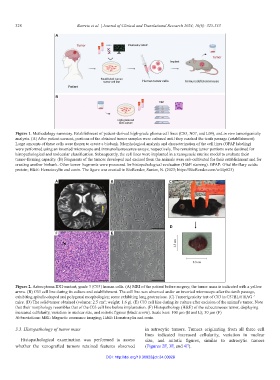
        Figure 2. Astrocytoma IDH-mutant, grade 3 (C03) human cells. (A) MRI of the patient before surgery; the tumor mass is indicated with a yellow
        arrow. (B) C03 cell line during its culture and establishment. The cell line was observed under an inverted microscope after the tenth passage,
        exhibiting spindle-shaped and polygonal morphologies; some exhibiting long protrusions. (C) Tumorigenicity test of C03 in C57BL/6 RAG
                                                                                                            −/−
                                             3
        mice. (D) The solid tumor obtained (volume: 2.5 cm ; weight: 1.6 g). (E) C03 cell line during its culture after excision of the animal’s tumor. Note
        that their morphology resembles that of the C03 cell line before implantation. (F) Histopathology (H&E) of the subcutaneous tumor, displaying
        increased cellularity, variation in nuclear size, and mitotic figures (black arrow). Scale bars: 100 µm (B and E); 50 µm (F)
        Abbreviations: MRI: Magnetic resonance imaging; H&E: Hematoxylin and eosin

        3.3. Histopathology of tumor mass                      in astrocytic  tumors.  Tumors originating  from all  three  cell
                                                               lines indicated  increased  cellularity, variation  in nuclear
          Histopathological  examination  was performed  to  assess   size, and mitotic  figures, similar  to astrocytic  tumors
        whether  the  xenografted  tumors  retained  features  observed   (Figures 2F, 3F, and 4F).

                                               DOI: http://doi.org/10.36922/jctr.24.00028

