


Page 23 - JCTR-11-1
P. 23
Journal of Clinical and
            Translational Research                                                Pesticides and ischemic heart disease


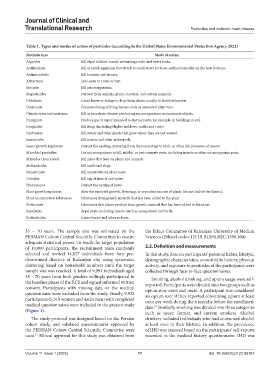
            Table 1. Types and modes of action of pesticides (according to the United States Environmental Protection Agency 2022)
            Pesticide type                                         Mode of action
            Algicides              Kill algae in lakes, canals, swimming pools, and water tanks.
            Antifoulants           Kill or repel organisms that attach to underwater surfaces, such as barnacles on the boat bottoms.
            Antimicrobials         Kill bacteria and viruses.
            Attractants            Lure pests to a trap or bait.
            Biocides               Kill microorganisms.
            Biopesticides          Derived from animals, plants, bacteria, and certain minerals.
            Defoliants             Cause leaves or foliage to drop from plants, usually to facilitate harvest.
            Desiccants             Promote drying of living tissues, such as unwanted plant tops.
            Disinfectants and sanitizers  Kill or inactivate disease-producting microorganisms on inanimate objects.
            Fumigants              Produce gas or vapor intended to destroy pests, for example, in buildings or soil.
            Fungicides             Kill fungi (including blights, mildews, molds and rusts).
            Herbicides             Kill weeds and other plants that grow where they are not wanted.
            Insecticides           Kill insects and other arthropods.
            Insect growth regulators  Disrupt the molting, maturing from the pupal stage to adult, or other life processes of insects.
            Microbial pesticides   Use microorganisms to kill, inhibit, or out-compete pests, including insects or other microorganism pests.
            Miticides (Acaricides)  Kill mites that feed on plants and animals.
            Molluscicides          Kill snails and slugs.
            Nematicides            Kill nematodes on plant roots.
            Ovicides               Kill egg of insects and mites.
            Pheromones             Disrupt the mating of pests.
            Plant growth regulators   Alter the expected growth, flowering, or reproduction rate of plants (do not include fertilizers).
            Plant-incorporated substances  Substances from genetic material that has been added to the plant.
            Protectants            Substances that plants produce from genetic material that has been added to the plant.
            Repellents             Repel pests, including insects (such as mosquitoes) and birds.
            Rodenticides           Control mice and other rodents.


            35  –  70  years.  The sample  size  was  estimated  by  the   the Ethics Committee of Rafsanjan University of Medical
            PERSIAN Cohort Central Scientific Committee to ensure   Sciences (Ethical codes: ID: IR.RUMS.REC.1398.160).
            adequate statistical power. To reach the target population
            of 10,000 participants, the recruitment team randomly   2.2. Definition and measurements
            selected and invited 14,827 individuals from four pre-  In this study, data on participants’ personal habits, lifestyle,
            determined districts of Rafsanjan city using systematic   demographic characteristics, comorbidity history, physical
            clustering based on household numbers until the target   activity, and exposure to pesticides of the participants were
            sample size was reached. A total of 9,991 individuals aged   collected through face-to-face questionnaires.
            35 – 70 years from both genders willingly participated in   Smoking, alcohol drinking, and opium usage were self-
            the baseline phase of the RCS and signed informed written   reported. Participants were divided into two groups such as
            consent. Participants with missing data on the medical   opium non-users and users. A participant was considered
            questionnaire were excluded from the study. Finally, 9,932   an opium user if they reported consuming opium at least
            participants (5,310 women and 4,624 men) with completed   once per week during the 6 months before the enrollment
            medical questionnaires were included in the present study   date.  Similarly, smoking was divided into three categories
                                                                   16
            (Figure 1).
                                                               such as never, former, and current smokers. Alcohol
              The study protocol was designed based on the Persian   drinkers included individuals who had consumed alcohol
            cohort  study,  and validated  questionnaires  approved  by   at least once in their lifetime. In addition, the prevalence
            the PERSIAN Cohort Central Scientific Committee were   of IHD was assessed based on the participants’ self-reports
                15
            used.  Ethical approval for this study was obtained from   recorded in the medical history questionnaire. IHD was


            Volume 11 Issue 1 (2025)                        17                            doi: 10.36922/jctr.22.00187

