


Page 90 - JCTR-11-3
P. 90
Journal of Clinical and
            Translational Research                                         Remdesivir outcomes in hospitalized COVID-19


                         A                                     B


                                           C


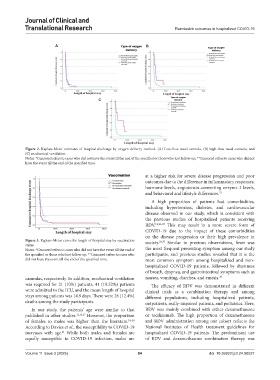
            Figure 2. Kaplan–Meier estimates of hospital discharge by oxygen delivery method. (A) Low-flow nasal cannula, (B) high-flow nasal cannula, and
            (C) mechanical ventilation.
            Notes: *Censored refers to cases who did not have the event till the end of the specified or those who lost follow-up; **Censored refers to cases who did not
            have the event till the end of the specified time.

                                                               at a higher risk for severe disease progression and poor
                                                               outcomes due to the difference in inflammatory responses,
                                                               hormone levels, angiotensin-converting enzyme 2 levels,
                                                               and behavioral and lifestyle differences. 22

                                                                 A  high  proportion  of patients  had comorbidities,
                                                               including hypertension, diabetes, and cardiovascular
                                                               disease observed in our study, which is consistent with
                                                               the  previous studies  of  hospitalized patients receiving
                                                               RDV. 12,23-27  This may result in a more severe form of
                                                               COVID-19  due to the impact of these comorbidities
                                                               on the disease progression or their high prevalence in
            Figure 3. Kaplan–Meier curve for length of hospital stay by vaccination   society. 23,27  Similar to previous observations, fever was
            status
            Notes: *Censored refers to cases who did not have the event till the end of   the most frequent presenting symptom among our study
            the specified or those who lost follow-up; **Censored refers to cases who   participants, and previous studies revealed that it is the
            did not have the event till the end of the specified time.  most common symptom among hospitalized and non-
                                                               hospitalized COVID-19  patients, followed by shortness
                                                               of breath, dyspnea, and gastrointestinal symptoms such as
            cannulas, respectively. In addition, mechanical ventilation   nausea, vomiting, diarrhea, and emesis. 28
            was required for 21 (10%) patients, 41 (19.52%) patients   The efficacy of RDV was demonstrated in different
            were admitted to the ICU, and the mean length of hospital   clinical trials as a combination therapy and among
            stays among patients was 14.9 days. There were 26 (12.4%)   different populations, including hospitalized patients,
            deaths among the study participants.               outpatients, really-impaired patients, and pediatrics. Here,

              In  our  study,  the  patients’  age  were  similar  to  that   RDV was mainly combined with either dexamethasone
            published in other studies. 12,16,17  However, the proportion   or tocilizumab. The high proportion of dexamethasone
            of females to males was higher than the literature. 18-20    and RDV administration among our cohort reflects the
            According to Davies et al., the susceptibility to COVID-19   National Institutes of Health treatment guidelines for
            increases  with  age.   While  both  males  and  females  are   hospitalized COVID-19  patients. The predominant use
                           21
            equally susceptible to COVID-19 infection, males are   of RDV and dexamethasone combination therapy was

            Volume 11 Issue 3 (2025)                        84                            doi: 10.36922/jctr.24.00027

