


Page 12 - JCTR-11-4
P. 12
Journal of Clinical and
            Translational Research                                                          Hidden cancer after VTE


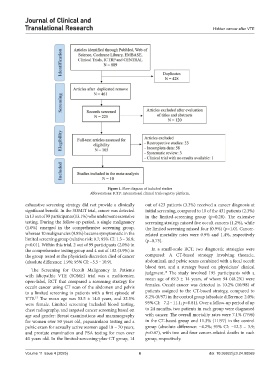
                                               Figure 1. Flow diagram of included studies
                                       Abbreviations: ICTP: International clinical trials registry platform.

            exhaustive screening strategy did not provide a clinically   out of 423 patients (3.3%) received a cancer diagnosis at
            significant benefit. In the SOMIT trial, cancer was detected   initial screening, compared to 10 of the 431 patients (2.3%)
            in 13 out of 99 participants (13.1%) who underwent extensive   in the limited-screening group (p=0.28). The extensive
            testing. During the follow-up period, a single malignancy   screening strategy missed five occult cancers (1.2%), while
            (1.0%) emerged in the comprehensive screening group,   the limited screening missed four (0.9%) (p=1.0). Cancer-
            whereas 10 malignancies (9.8%) became symptomatic in the   related mortality rates were 0.9% and 1.4%, respectively
            limited screening group (relative risk: 9.7; 95% CI: 1.3 – 36.8;   (p=0.75).
            p<0.01). Within this trial, 2 out of 99 participants (2.0%) in
            the comprehensive testing group and 4 out of 102 (3.9%) in   In a small-scale RCT, two diagnostic strategies were
            the group tested at the physician’s discretion died of cancer   compared: A  CT-based strategy involving thoracic,
            (absolute difference: 1.9%; 95% CI: −5.5 ‒ 10.9).  abdominal, and pelvic scans combined with a fecal occult
                                                               blood test, and a strategy based on physicians’ clinical
              The Screening for Occult Malignancy in Patients          18
            with Idiopathic VTE (SOME) trial was a multicenter,   judgment.  The study involved 195 participants with a
            open-label, RCT that compared a screening strategy for   mean age of 69.3 ± 14 years, of whom 94 (48.2%) were
            occult cancer using CT scan of the abdomen and pelvis   females. Occult cancer was detected in 10.2% (10/98) of
            to a limited screening in patients with a first episode of   patients assigned to the CT-based strategy, compared to
            VTE.  The mean age was 53.5 ± 14.0  years, and 32.5%   8.2% (8/97) in the control group (absolute difference: 2.0%;
                17
            were female. Limited screening included blood testing,   95% CI: −7.2 ‒ 11.1; p=0.81). Over a follow-up period of up
            chest radiography, and targeted cancer screening based on   to 24 months, two patients in each group were diagnosed
            age and gender: Breast examinations and mammography   with cancer. The overall mortality rates were 7.1% (7/98)
            for women over 50 years old, papanicolaou testing and a   in the CT-based group and 11.3% (11/97) in the control
            pelvic exam for sexually active women aged 18 – 70 years,   group (absolute difference: −4.2%; 95% CI: −12.3 – 3.9;
            and prostate examination and PSA testing for men over   p=0.67), with two and four cancer-related deaths in each
            40 years old. In the limited-screening-plus-CT group, 14   group, respectively.


            Volume 11 Issue 4 (2025)                        6                             doi: 10.36922/jctr.24.00069

