


Page 17 - JCTR-11-4
P. 17
Journal of Clinical and
            Translational Research                                                          Hidden cancer after VTE


            A


            B


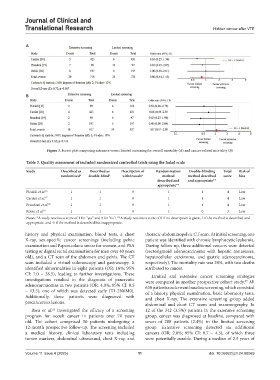
                     Figure 3. Forest plot comparing extensive versus limited screening for overall mortality (A) and cancer-related mortality (B)

            Table 3. Quality assessment of included randomized controlled trials using the Jadad scale

            Study          Described as   Described as   Description of   Randomization   Double‑blinding   Total   Risk of
                           randomized*  double‑blind*  withdrawals*   method     method described   score  bias
                                                                    described and   and appropriate**
                                                                    appropriate**
            Piccioli et al. 16  1          1             0              1              1          4    Low
            Carrier et al. 17  1           1             0              1              1          4    Low
            Prandoni et al. 18  1          1             0              1              1          4    Low
            Robin et al. 19    1           1             0              1              0          3    Low
            Notes: *A study receives a score of 1 for “yes” and 0 for “no”; **A study receives a score of 0 if no description is given, 1 if the method is described and
            appropriate, and -1 if the method is described but inappropriate.

            history and physical examination, blood tests, a chest   thoracic-abdominopelvic CT scan. At initial screening, one
            X-ray, sex-specific cancer screenings (including pelvic   patient was identified with chronic lymphocytic leukemia.
            examination and Papanicolaou smear for women, and PSA   During follow-up, three additional cancers were detected
            testing or digital rectal examinations for men over 40 years   (rectosigmoid adenocarcinoma with hepatic metastases,
            old), and a CT scan of the abdomen and pelvis. The CT   hepatocellular carcinoma, and gastric adenocarcinoma,
            scan included a virtual colonoscopy and gastroscopy. It   respectively). The mortality rate was 28%, with two deaths
            identified abnormalities in eight patients (OR: 16%; 95%   attributed to cancer.
            CI: 7.0 – 28.5), leading to further investigations. These   Limited and extensive cancer screening strategies
            investigations resulted in the diagnosis of pancreatic   were compared in another prospective cohort study.  All
                                                                                                         23
            adenocarcinomas in two patients (OR: 4.0%; 95% CI: 0.5   630 patients underwent baseline screening, which consisted
            –  13.5),  one of  which  was  detected early  (T1-2N0M0).   of a history, physical examination, basic laboratory tests,
            Additionally, three patients were diagnosed with   and chest X-ray. The extensive screening group added
            precancerous lesions.                              abdominal and chest CT scans and mammography. In
              Rieu  et al.  investigated the efficacy of a screening   12 of the 342 (3.5%) patients in the extensive screening
                       22
            program for occult cancer in patients over 70  years   group, cancer was diagnosed at baseline, compared with
            old. The cohort comprised 50  patients undergoing a   seven  of  288  patients  (2.4%)  in the limited  screening
            12-month prospective follow-up. The screening included   group. Extensive screening detected six additional
            a medical  history, clinical laboratory  tests including   cancers (OR: 2.0%; 95% CI: 0.7 – 4.3), of which three
            tumor markers, abdominal ultrasound, chest X-ray, and   were potentially curable. During a median of 2.5 years of


            Volume 11 Issue 4 (2025)                        11                            doi: 10.36922/jctr.24.00069

